Introduction
FDA Guidance Signals Tougher Flavored Vape Review is a vape industry news update focused on the FDA’s March and April 2026 draft guidance for flavored e-cigarette applications. The update places closer attention on youth-related risk, adult smoker benefit, and access restriction technology.
The update does not mean flavored e-cigarettes are suddenly easier to bring to market. In fact, it points in the opposite direction. The FDA is making it clearer that flavored products may need stronger evidence before they can move through review. The main question is simple but difficult: can a flavored vape show enough benefit for cigarette smokers to outweigh the added risk of youth use?
That question could shape how brands design future products, prepare applications, and explain the role of flavor in the market.
FDA’s Main Focus: Youth Risk Vs Smoking-Related Benefit
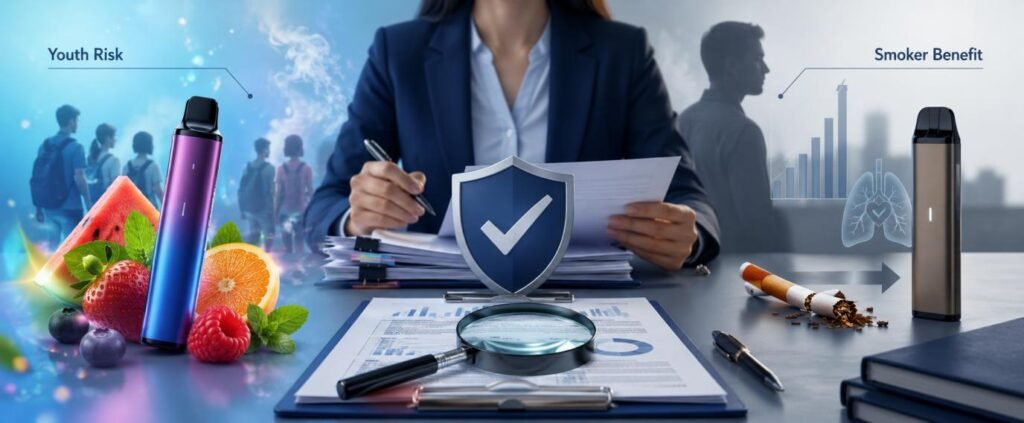
The draft guidance focuses on how the FDA may weigh youth-related risk when reviewing flavored e-cigarette applications. That balance is also reflected in the FDA document Flavored ENDS Premarket Applications, where the agency explains how youth risk may affect flavored ENDS review. According to the FDA, the guidance discusses how much added benefit an applicant may need to show compared with a tobacco-flavored e-cigarette for a flavored product to be considered appropriate for the protection of public health.
That is an important shift for the industry because flavor has always been one of the most commercially important parts of vaping. Fruit, dessert, mint, ice, and beverage-style flavors have helped build much of the modern vape market. But those same flavors are also the center of regulatory concern because of their potential appeal to young users.
For manufacturers, the message is clear. A flavored product may need more than basic product data, ingredient details, or standard technical documents. Companies may need to show why that flavor matters for smokers who are trying to move away from cigarettes, and why the product can be marketed without creating unnecessary youth appeal.
This makes the application process more evidence-driven. Brands that treat flavor mainly as a marketing tool may face a harder path. Brands that can connect flavor choice to switching behavior, reduced cigarette use, and controlled access may have a stronger position.
Access Restriction Technology Could Become More Important

Another notable part of the FDA update is the mention of novel device access restriction technology. The agency listed this as one of the areas discussed in the draft guidance.
This could become an important direction for future product design. In the past, most vape innovation focused on flavor, battery size, puff count, screen design, airflow, or coil performance. Those features still matter, but access control may become more commercially relevant if regulators continue to focus on youth prevention.
For example, future products may place more attention on age-gating systems, product activation controls, app-based restrictions, locked hardware, or retail verification tools. In this context, devices such as GLAS systems are sometimes referenced as emerging examples of how age-gating and controlled access mechanisms can be integrated directly into hardware design, aligning product functionality with stricter regulatory expectations. These features may not be as exciting to everyday users as better flavor or longer battery life, but they could become more important for companies trying to build products that fit a stricter regulatory environment.
This does not mean every brand will immediately move in that direction. Access restriction technology can add cost, complexity, and user friction. However, the FDA’s attention to this area suggests that responsible product access may become part of the broader product story, not just a back-end compliance issue.
What This Means for Vape Brands
For vape brands, the March and April FDA updates may change how new flavored products are developed and presented. It is no longer enough to say that a flavor is popular or that customers prefer it. Companies may need to explain what role the flavor plays in helping cigarette smokers switch, reduce cigarette use, or stay away from combustible tobacco.
This could push brands to think more carefully about product positioning. Flavor names, packaging, visual style, and marketing language may all receive closer attention. Products that look too youth-oriented may become harder to defend, even if the hardware itself is technically strong.
At the same time, companies with better research, cleaner documentation, and more controlled marketing systems may gain an advantage. Larger brands may be better prepared for this kind of review, but smaller companies that take compliance seriously could also use it as a way to stand apart from low-quality or unauthorized products.
What This Means for Retailers
Retailers may also feel the impact, even if the guidance is aimed mainly at applications and manufacturers. If flavored products face tighter review expectations, retailers may need to pay more attention to which brands can show stronger compliance discipline.
That means product selection may become less about chasing every new flavor and more about choosing suppliers with clear documentation, stable distribution, and responsible marketing. Retailers that sell into regulated markets may also need to watch how brands discuss age restrictions, packaging, and product claims.
The practical effect is that the flavored vape market may become more selective. Products with weak positioning, unclear supply chains, or aggressive youth-leaning branding may face more pressure, while better-documented products may become more valuable.
Industry Outlook
The FDA’s draft guidance is not a final rule yet. The agency opened the public comment period in April and said comments should be submitted by May 11, 2026, for consideration before work begins on the final guidance.
Still, the direction is already worth watching. The U.S. flavored e-cigarette market is not only about consumer demand anymore. It is increasingly about evidence, access control, and whether a product can show a public health argument strong enough to survive review.
For the vape industry, this may mark a more serious stage in flavored product competition. The winners may not simply be the brands with the most flavors or the strongest marketing. They may be the brands that can prove their products serve a clearer purpose for smokers while reducing the risks regulators are most concerned about.
Final Thoughts
The FDA’s March and April 2026 update puts flavored e-cigarette applications under a sharper lens. The core issue is not whether flavors are popular. The issue is whether flavored products can show enough benefit for cigarette smokers while managing youth-related risks.
That makes this update important for manufacturers, retailers, and anyone watching the future of the U.S. vape market. Flavor is still a major part of vaping, but from here, stronger evidence and better access-control thinking may matter just as much as taste.