Ireland has advanced the Public Health (Tobacco Products and Nicotine Inhaling Products) (Amendment) Bill 2026 (Bill 36 of 2026) after it passed its final stage in the Dáil. The bill will now proceed to the Seanad for further consideration and would introduce new restrictions on vape flavours, packaging, retail advertising, in-store displays, and the sale of nicotine pouches to minors.
Table of Contents
Introduction
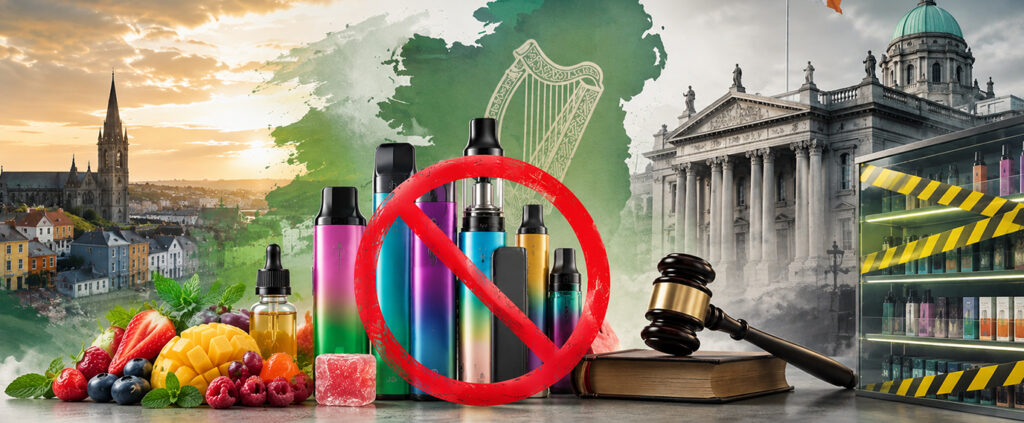
Ireland is moving closer to implementing one of its most significant regulatory updates for vaping and other nicotine products in recent years.
2First’s report on Public Health (Tobacco Products and Nicotine Inhaling Products) (Amendment) Bill 2026 shows that Ireland has completed its final stage in the Dáil, and will now proceed to the Seanad for further legislative review.
If enacted, the bill would introduce significant changes to how nicotine inhaling products and other nicotine consumption products are marketed, displayed and sold. Proposed measures include limiting vape flavours to tobacco or unflavoured options, restricting packaging colours and imagery, banning retail advertising and point-of-sale displays in mixed retail stores, and strengthening youth access controls for nicotine pouches.
Vape Flavour and Packaging Restrictions
Flavour Restrictions
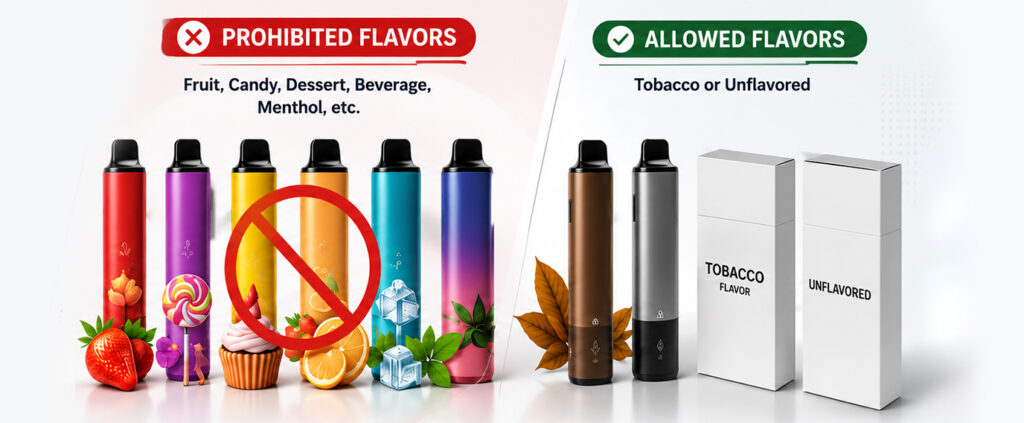
One of the bill’s most significant proposals is a substantial reduction in the range of permitted vape flavours.
Under the bill, nicotine inhaling products like disposable vapes and pod systems would be limited to tobacco-flavoured or unflavoured varieties. If adopted, fruit, dessert, beverage, ice and other flavours would face sales restrictions.
In addition, the bill regulates how flavours are communicated to consumers. Manufacturers and retailers would be prohibited from using flavour descriptors or promotional language beyond basic flavour names, with the intent of reducing product appeal to younger consumers.
Packaging Restrictions
The bill also introduces stricter rules governing the visual presentation of nicotine inhaling products, including packaging and device design.
The use of colours, graphics, and imagery on vape devices and product packaging would be subject to tighter regulatory control. According to the Irish Examiner, the proposed measures aim to restrict bright colours, decorative visuals, and packaging designs that may appeal to minors.
Retail Advertising & In-Store Display Restrictions
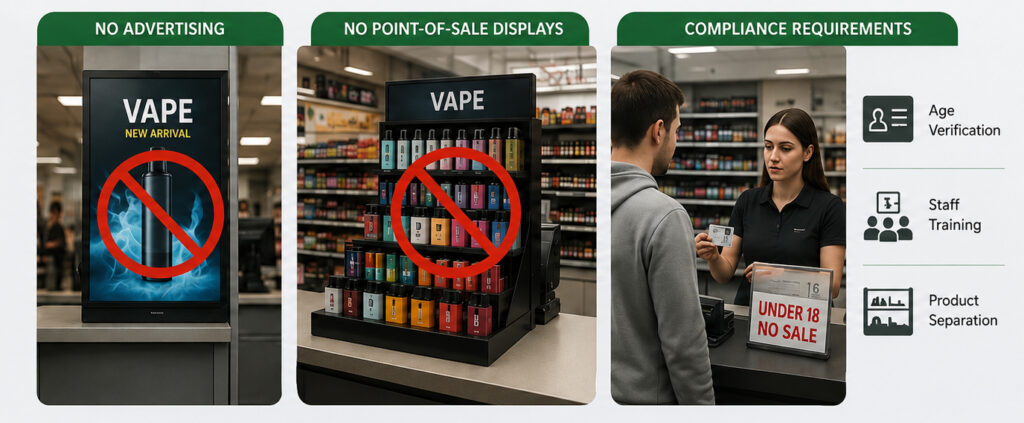
The bill imposes new restrictions on how nicotine products may be promoted and displayed at retail locations.
The advertising of nicotine inhaling products and nicotine consumption products (diposable vapes, pod systems, pod mods, etc. ) would be prohibited in all retail outlets. Additionally, point-of-sale displays would no longer be permitted in mixed retail outlets, including convenience stores and community retailers that sell food, household goods, tobacco products, or other merchandise alongside vapes or nicotine products.
Nicotine Pouches Regulation
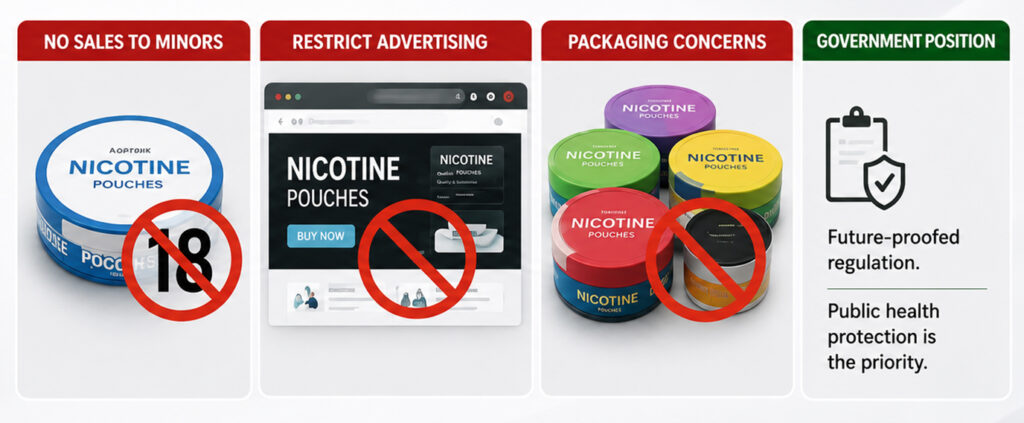
The bill extends regulatory controls to nicotine consumption products, including nicotine pouches, prohibiting their sale to individuals under the age of 18. It also introduces restrictions on how these products may be advertised and sold through retail channels.
During the Dáil debate, Social Democrats TD Pádraig Rice called for nicotine pouches to be included in packaging restrictions, noting that these products are often sold in bright, colourful packaging and are increasingly popular among younger consumers.
Minister of State for Public Health Jennifer Murnane O’Connor stated that the bill already includes provisions covering nicotine pouches, and the additional packaging restrictions would require a new European Union notification process, which could delay implementation of the bill by up to one year.
Industry Impact
If enacted, the bill could significantly reshape Ireland’s nicotine product market by introducing a more unified regulatory framework for vaping products, nicotine pouches and future nicotine products. Covering flavours, packaging, retail display, advertising, and youth access, the proposed measures would require manufacturers, brand owners, distributors, and retailers (including online vape stores) to adapt to broader compliance requirements.
Reduced Product Differentiation
One of the most significant impacts would be a reduction in product differentiation, particularly as vape flavours are limited to tobacco-flavoured or unflavoured varieties. These combined measures would significantly narrow the role of flavour innovation in product differentiation and branding within the Irish vape market, shifting competition away from flavour-driven marketing toward more standardized product offerings.
Brand Identity and Product Design
Rather than focusing solely on product composition, the bill also regulates how nicotine products are visually presented in the retail market. Restrictions on packaging colours, imagery, flavour descriptors, and device aesthetics may require manufacturers to redesign product packaging and hardware to comply with the new standards. These changes could affect brand identity, SKU strategy, and long-term product positioning.
Retail Operations and Compliance
At the retail level, advertising bans and point-of-sale display restrictions would reduce product visibility in stores. Retailers may need to reorganize product displays, remove promotional materials, and adjust how regulated nicotine products are presented to customers.
The bill would also introduce additional enforcement measures and related offenses. Retailers could face increased compliance responsibilities, including staff training, age verification procedures, removal or covering of product displays, and clearer separation of regulated product categories within stores.
Broader Regulatory Direction
The inclusion of nicotine pouches under a similar regulatory framework signals a broader policy direction. Ireland is moving toward treating all non-medical nicotine products under a more unified compliance structure, particularly regarding youth access, retail presentation, and marketing practices.
Ireland’s Department of Health has described the legislation as “future-proofed”, meaning it is intended to cover not only existing nicotine products but also future product categories.
Although the measures may have an impact on some businesses, this bill is primarily intended to protect public health by reducing youth exposure to nicotine products and limiting nicotine addiction.
Conclusion
Although the Public Health (Tobacco Products and Nicotine Inhaling Products) (Amendment) Bill 2026 has passed its final stage in the Dáil, it is not yet law and still requires Seanad review and EU notification. The final implementation timeline will depend on these procedures as well as Ireland’s legislative scheduling.
Any future amendments, particularly those related to nicotine pouch regulations, may also require EU notification, potentially affecting the overall rollout timeline.
Overall, the bill represents a significant update to Ireland’s nicotine regulatory framework. It signals a shift toward tighter controls on vape flavours, packaging, retail visibility, and youth access to nicotine products, and a broader move toward more unified and stricter regulation of nicotine products.
FAQ
Q1: Has Ireland Banned Vape Flavours?
No. The bill proposes restricting vape flavours to tobacco or unflavoured options, but it has not yet become law.
Q2: What Stage Is the Irish Vape Bill At?
It has passed the final stage in the Dáil and will now proceed to the Seanad for further consideration.
Q3: When Will the Law Come into Force?
The timeline depends on Seanad approval and the EU notification process, which may also affect implementation timing.