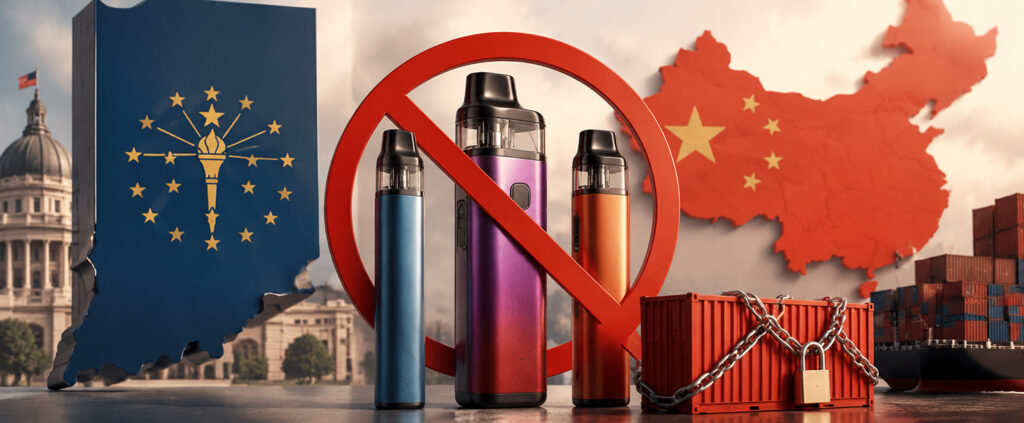
Indiana Senate Bill 185 (SB 185), authored by State Sen. Ron Alting (R-Lafayette), was enacted as Senate Enrolled Act 185 (SEA 185) and took effect on July 1, 2026.
The law prohibits the sale of vaping products manufactured in foreign adversarial nations, including China, and is framed as a measure to protect consumers and strengthen regulatory enforcement.
Table of Contents
When Did the Indiana Vape Ban Start
Early 2026 — Introduction & Advancement of SB 185
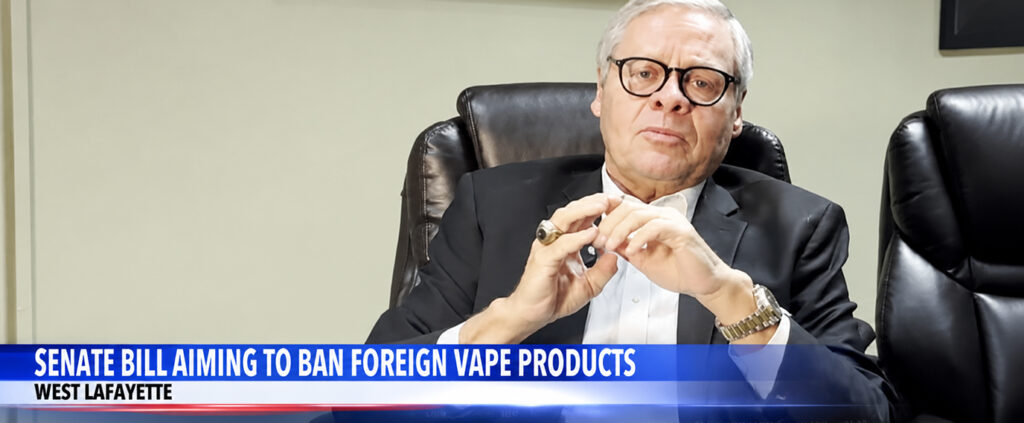
As early as January 2026, 2Firsts reported that Indiana State Sen. Ron Alting introduced Senate Bill 185 (SB 185), proposing new restrictions on vaping product sales in Indiana.
The bill proposed to:
- Ban vape shops across Indiana from selling any foreign-made vaping products
- Restrict retail shelves to American-made products only
- Address concerns over imported vape hardware, particularly from China
On January 14, 2026, SB 185 unanimously passed the Indiana Senate Committee on Public Policy and continued advancing through the legislative process.
At this stage, Senate Bill 185 (SB 185) remained a proposed bill and had not yet become law.
July 1, 2026 — Law officially Takes Effect
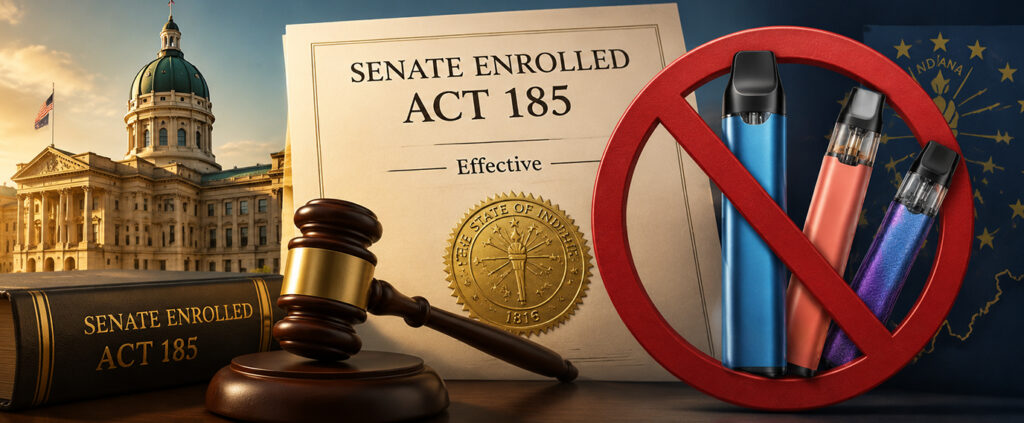
SB 185 later received unanimous approval from the Indiana General Assembly and was enacted as Senate Enrolled Act (SEA 185).
The law officially took effect on July 1, 2026, making its provisions legally enforceable across Indiana.
Why Was SEA 185 Enacted
According to State Sen. Ron Alting, Senate Enrolled Act 185 (SEA 185) was introduced to protect Indiana consumers by preventing the sale of vaping products manufactured in foreign adversarial nations like China.
Alting stated that many vaping products imported from China contain chemicals that are prohibited in China but are still exported to the United States. He also cited recent warnings from federal agencies, saying some imported vaping products could pose significant health risks to American consumers.
In announcing that the law had taken effect on July 1, 2026, Alting said SEA 185 is intended to:
- Protect Hoosiers from potentially dangerous chemicals found in certain imported vaping products
- Prohibit the sale of vaping products manufactured in foreign adversarial nations, such as China.
- Improve consumer safety by reducing access to products that lawmakers believe may present health risks
- Keep consumer spending within the United States rather than sending it overseas to foreign adversarial nations
Alting described protecting Hoosiers as one of his top legislative priorities and said the law is designed to keep potentially dangerous products out of Indiana while strengthening oversight of the state’s vaping market.
What Vapes Are Getting Banned
Under SEA 185, Indiana prohibits the sale of vaping products manufactured in foreign adversarial nations, including China.
Rather than targeting specific brands or flavors, the law focuses on where the products are manufactured.
Products potentially affected include:
- Disposable vapes
- Pod systems
- Vape kits
- Prefilled pods and cartridges
- Other vaping devices manufactured in foreign adversarial nations
Since more than 90% of the world’s vape hardware is produced by China and Chinese-made products dominate vape shop inventories across Indiana, the law could affect a large portion of products on the market in Indiana.
What Are “Domestic-Only” Vape Products
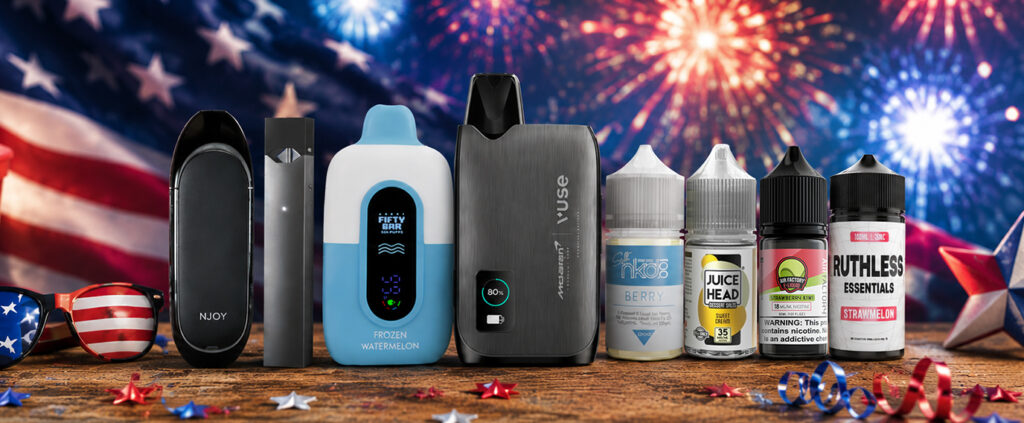
SEA 185 is intended to shift Indiana’s vape market toward products manufactured in the United States, including American made vapes and e-liquids.
The law does not establish a new product category or manufacturing standard. Instead, it limits which vaping products may legally be sold based on their country of manufacture.
Consumers may notice:
- Fewer imported vape products, especially from China
- More American made vape products
- Changes in product availability as retailers update their inventory
Who Is Affected by Indiana Vape Law
Vape Retailers
Retailers (including online vape stores) must ensure that the vaping products they sell comply with the new manufacturing restrictions.
Manufacturers & Distributors
Companies importing vaping products from foreign adversarial nations may lose access to Indiana’s market.
Vapers
Vapers may experience:
- Reduced availability of imported products.
- Changes in brand selection.
- Increased availability of domestically manufactured vaping products.
The Future of Vaping in Indiana
The future of vaping in Indiana is moving toward a more regulated and compliance-driven market following the implementation of SEA 185 (effective July 1, 2026). This shift reflects broader regulation updates across the United States, where states are tightening enforcement on vape product sourcing and compliance standards.
The law restricts vaping products made in foreign adversarial countries, including China, which is expected to reshape product availability and supply chains across the state.
Key trends include:
- Fewer imported vaping products on retail shelves
- Greater reliance on U.S.-compliant or approved supply chains
- Stricter enforcement and inventory compliance checks for retailers
- Ongoing restructuring of vape distribution and sourcing channels
Overall, Indiana’s vaping market is likely to become more limited in product variety but more tightly controlled under state and federal regulatory alignment.
Conclusion
Indiana’s SEA 185 (Indiana Vape Ban) represents a significant shift in the state’s vaping regulation, moving the focus from product type or flavor to “country of manufacture.” Taking effect on July 1, 2026, the law is expected to reshape the local market by prohibiting imported products—particularly those made in China—and increasing reliance on U.S.-compliant supply chains. Its ultimate impact will depend on how retailers, manufacturers, and regulators adapt to the new enforcement and compliance requirements.
Frequently Asked Questions
Q1: Is Indiana SB 185 Now in Effect?
Yes. It officially took effect on July 1, 2026, as SEA 185.
Q2: What Products Are Banned?
The law prohibits the sale of vaping products manufactured in foreign adversarial nations, including China.
Q3: Why Did Indiana Pass SB 185?
According to Sen. Ron Alting, the law aims to protect consumers from potentially harmful imported vaping products and strengthen regulatory oversight.