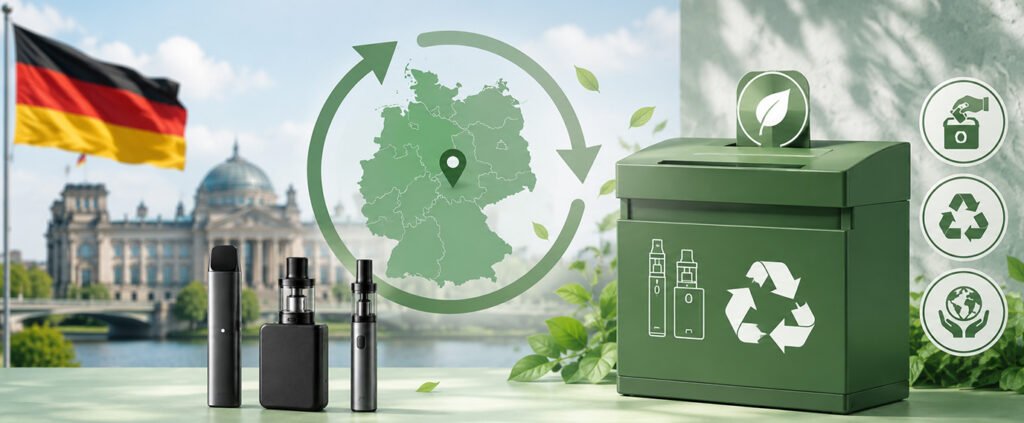
From July 1, 2026, Germany will implement stricter environmental requirements for e-cigarette and HNB devices through an amendment to the Electrical and Electronic Equipment Act (ElektroG).
Under the new rule, retail outlets that sell e-cigarettes and HNB devices must accept used vape devices free of charge for return and recycling. The requirement applies to relevant points of sale, expanding Germany’s existing electronic waste collection network by integrating vape retailers and other sales locations into the take-back system.
Table of Contents
Key Takeaways
- Germany expands mandatory take-back obligations for e-cigarettes and electronic tobacco heating devices from July 1, 2026.
- Retailers selling these products must accept used vape devices free of charge, regardless of whether customers purchase a new product.
- The rule applies to specialty vape stores, kiosks, petrol stations, tobacco shops, and other retail outlets selling relevant products.
- The “0:1 take-back” rule allows vapers to return used devices without buying a replacement.
- The rule aims to improve electronic waste recycling and reduce fire risks caused by improperly discarded lithium-ion batteries.
Who Must Offer Vape Take-Back
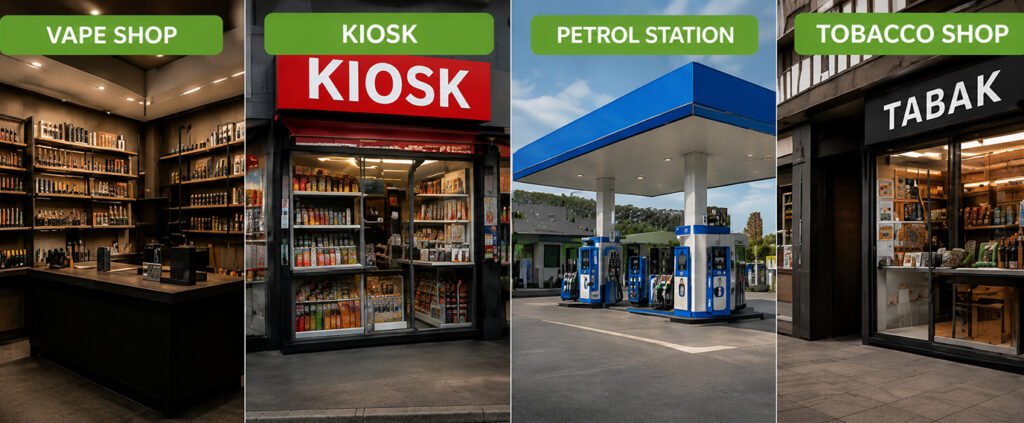
The take-back obligation applies to all points of sale that sell these products, regardless of store size, including:
- Specialty vape stores
- Kiosks
- Petrol stations
- Tobacco shops
- Other retail outlets selling e-cigarettes and HNB devices
The obligation is based on the products sold, not the store size or business type, and retailers must provide a free vape recycling or return option, even if the customer does not purchase a new product.
What Is Germany’s “0:1 Take-Back” Rule
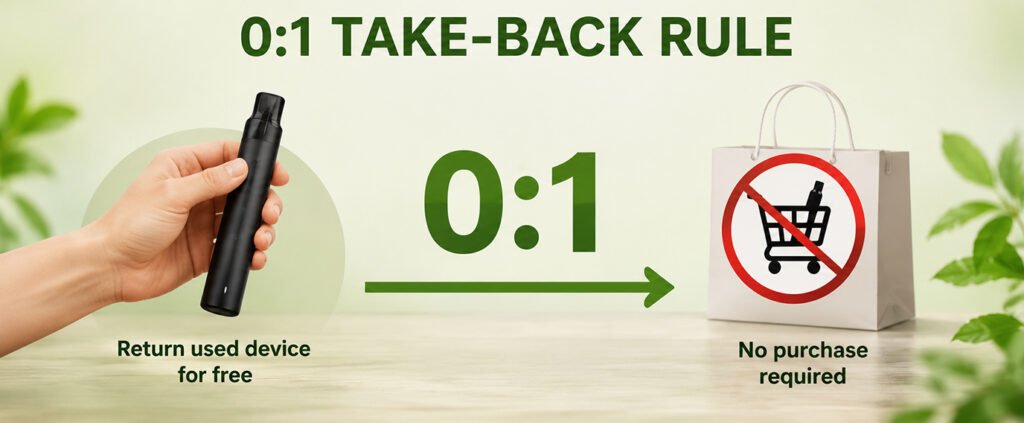
According to Tobacco Journal International and 2Firsts, Germany’s new system introduces a “0:1 take-back” rule, meaning vapers can return used devices, without any obligation to purchase a replacement product.
For example, vapers can:
- Return an old disposable vape after use
- Bring back a used device even if it was purchased elsewhere
- Return a device without making any additional purchase
The only exception applies to retailers who have completely stopped selling vaping or HNB products at least six months before the deadline.
Why Did Germany Introduce Vape Take-Back Rule
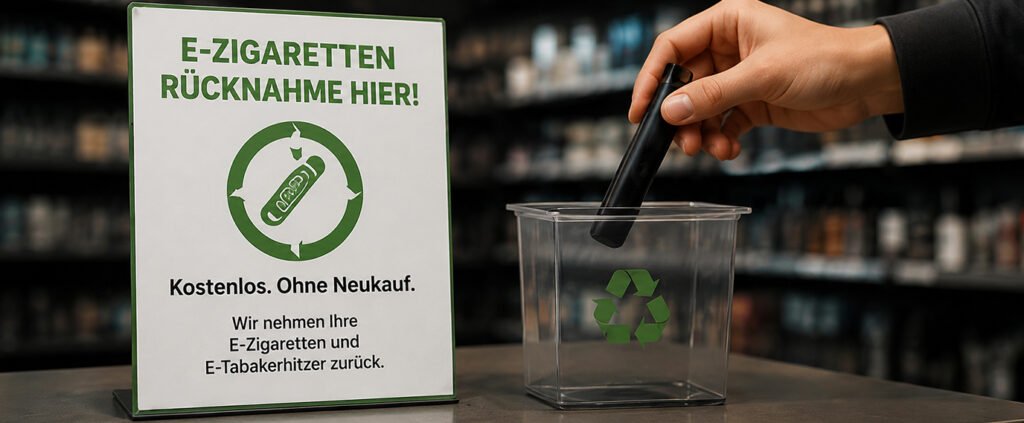
Disposable vapes and electronic vaping products are legally classified as electronic equipment because they contain lithium-ion batteries, electronic components, metals and other recyclable materials. Improper disposal creates several environmental and safety concerns.
When used vapes are thrown into general waste streams, batteries may be damaged during:
- Waste collection
- Transportation
- Compression
- Sorting or recycling processes
Damaged lithium-ion batteries can overheat and ignite, creating risks for waste workers, collection vehicles, and recycling facilities.
The new rule aims to improve recovery of electronic components and raw materials, reduce electronic waste, prevent lithium battery-related fires, and keep valuable materials within the recycling cycle.
Retail Compliance Requirements
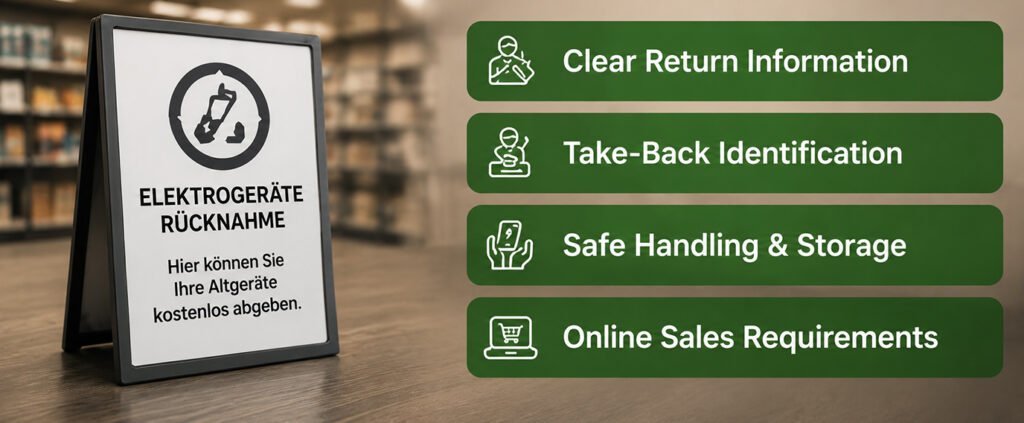
Vape shop owners must establish procedures to meet the new take-back obligations.
Clear Return Information
Retail outlets must clearly inform customers that used e-cigarettes and electronic tobacco heating devices can be returned. They must offer notices, flyers, posters and official communication materials.
Take-Back Identification
Collection points must use the official electrical equipment take-back logo so vapers can easily recognize where devices can be returned.
Safe Handling and Storage
Vape shop owners should ensure returned devices are stored and handled safely because used vapes may still contain remaining battery charge, e-liquid residue, and electronic components.
Online Sales Requirements
Online vape stores selling e-cigarettes or electronic tobacco heating devices must also provide practical return information and appropriate vape recycling arrangements for vapers.
Environmental Impact and Lithium-ion Battery Safety
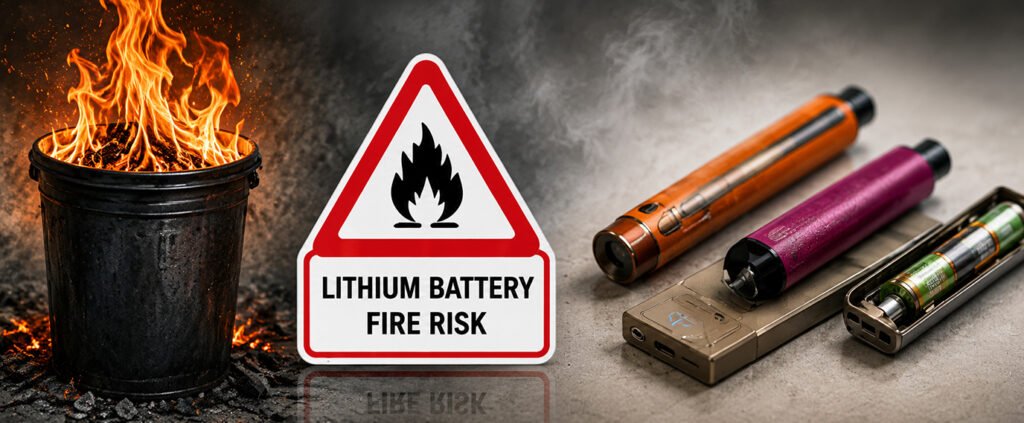
Germany’s new vape take-back rules are closely linked to concerns about lithium-ion battery waste.
Although disposable vapes are small electronic products, they are battery-powered electronic devices. Treating them as ordinary household waste can create significant risks.
Waste management operators across Europe have highlighted increasing fire risks associated with improperly discarded lithium-ion batteries. Waste facilities have reported incidents where discarded battery-powered devices have triggered fires in recycling center or trash trucks after batteries were damaged during waste handling.
By expanding collection channels, Germany aims to improve recycling rates while reducing environmental and safety problems associated with improper disposal.
Will Germany Ban Disposable Vapes
The July 2026 take-back obligation does not ban disposable vapes. Instead, it creates a nationwide collection system for used devices already on the market.
However, discussions about a possible disposable vape ban in Germany have continued as policymakers and environmental groups raise concerns about electronic waste, resource consumption, improper disposal, and lithium-ion battery safety.
The effectiveness of the new take-back system may influence future decisions regarding additional restrictions.
Conclusion
Germany’s vape recycling and take-back rules in 2026 represent a significant shift in electronic waste management for vaping products. By requiring free returns at relevant points of sale that sell e-cigarettes and HNB devices, the rule strengthens vape take-back systems, promotes responsible product lifecycle management, and helps reduce safety risks associated with improper lithium-ion battery disposal.
This new regulation update also creates broader responsibilities for vape brands and vape shop owners, including improving product recyclability, battery safety, material information, collection procedures, and consumer return awareness. For sale outlets like kiosks and petrol stations, establishing safe storage and recycling processes will be a key compliance challenge.
As Germany moves toward a more circular approach to electronic products, the vape industry will need to balance market access with environmental responsibility and long-term regulatory compliance.
Frequently Asked Questions
Q1: When Does Germany’s New Vape Take-Back Rule Start?
The rule takes effect on July 1, 2026.
Q2: Do Vapers Need to Buy a New Product to Return an Old One?
No. The “0:1 take-back” system allows vapers to return used devices free of charge without any purchase requirement.
Q3: Which Stores Must Accept Used Vape Returns?
All points of sale that sell e-cigarettes or HNB products, including specialty vape stores, kiosks, petrol stations, and tobacco shops, and other relevant retail outlets.
Q4: Why Are Disposable Vapes Considered Electronic Waste?
Disposable vapes contain lithium-ion batteries and electronic components, meaning they fall under electronic waste management requirements.
Q5: Can Disposable Vapes Still Be Sold in Germany?
Yes. The July 2026 rule introduces vape recycling and take-back requirements but does not intend to ban disposable vapes.