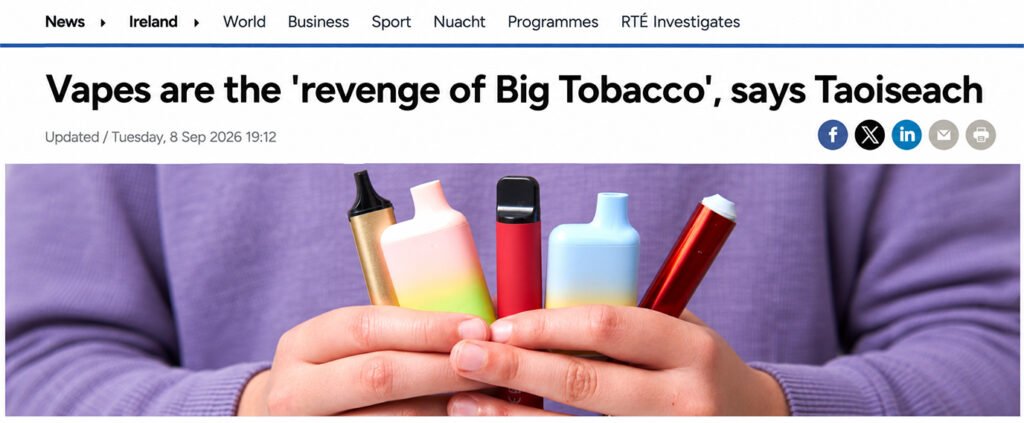
According to RTÉ News, Irish Prime Minister Micheál Martin voiced support for an outright vape ban at a Fianna Fáil gathering in Tullamore on September 8, 2026, describing vapes as the “revenge of Big Tobacco” and claiming that “vapes are nearly worse than cigarettes”. However, Ireland has not introduced a nationwide ban on all electronic cigarettes.
Ireland’s Health Service Executive (HSE) acknowledges that vaping delivers nicotine with fewer toxins than cigarettes and may be less harmful, but it does not recommend vaping to quit smoking and warns that using e-cigarettes is not harmless.
The UK takes a different approach. The NHS considers nicotine vaping less harmful than smoking and an effective tool for helping adults quit smoking. The UK’s 2022 evidence review likewise concluded that vaping carries substantially lower health risks than smoking in the short and medium term, but vaping is not risk-free, and its long-term effects remain uncertain.
Table of Contents
1. What Is in a Vape? What Are the Ingredients in Vape Juice?
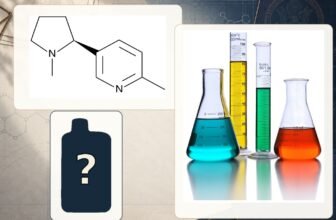
Martin also claimed that “we don’t know what’s in vapes”. So, what is vape juice made of? Are vape ingredients really unknown? According to UK government guidance, e-liquid typically contains propylene glycol (PG), vegetable glycerin (VG), flavourings and nicotine, although the exact formulation varies by product.
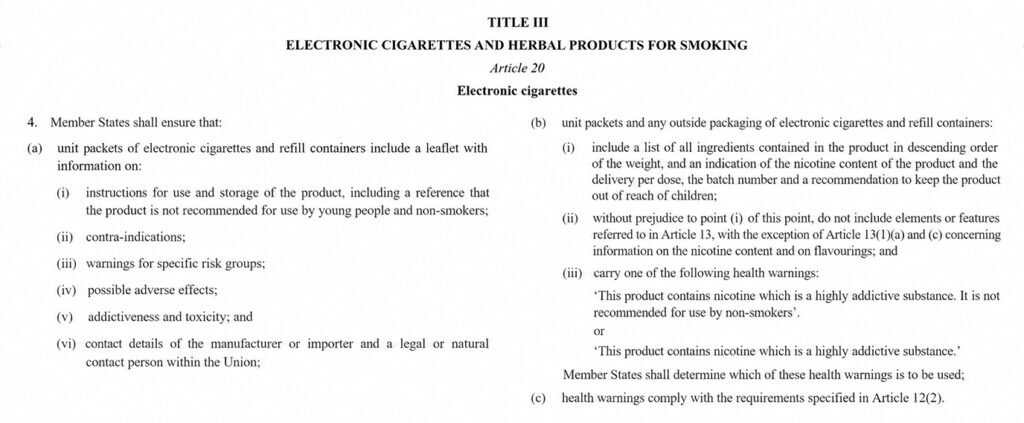
Moreover, as an EU member state, Ireland is subject to Article 20 of the EU Tobacco Products Directive (Directive 2014/40/EU), which requires manufacturers and importers to report the ingredients and emissions of nicotine-containing e-cigarettes, submit relevant toxicological data, and list ingredients on product packaging. These requirements show that e-cigarette ingredients are subject to regulatory disclosure. However, knowing what is in a vape does not mean that the health effects of every ingredient, particularly when heated and inhaled, are fully understood.
2. Why Is Ireland Tightening Vape Regulations?
Ireland’s tougher vape regulations reflect concerns about youth nicotine use, the appeal of disposable vapes to younger vapers, and the marketing and retail display of these vaping devices. The environmental impact of disposable nicotine vapes is another concern. These issues help explain the push for tighter controls, but they do not by themselves establish that vaping is as harmful as smoking.
Is Vaping Worse Than Smoking Cigarettes?
Martin’s claim that vapes are “nearly worse than cigarettes” goes beyond the conclusions of major UK evidence reviews. While vaping is not harmless and its long-term effects remain uncertain, available evidence indicates that regulated nicotine e-cigarettes expose vapers to fewer harmful substances than combustible cigarettes. The key policy challenge for Ireland is to reduce youth access and vaping-related harm without overlooking the difference between smoking and vaping.
3. Ireland Single Use Vape Ban Takes Effect on Jan. 24, 2027
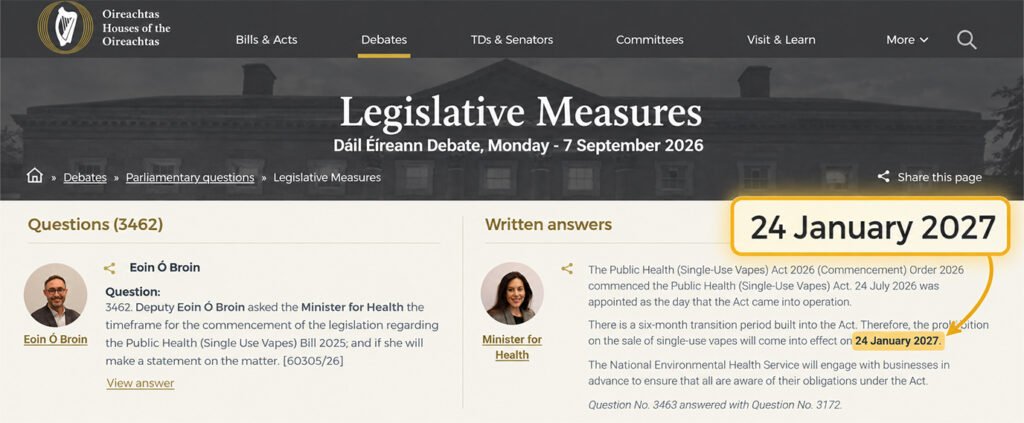
Ireland’s Public Health (Single-Use Vapes) Act 2026 introduces a ban on the sale of single-use vapes, including disposable nicotine vapes and single use vapes without nicotine. The Act commenced on July 24, 2026, with a six-month transition period before the sales ban takes effect on January 24, 2027.
A device is not necessarily reusable simply because it has a charging port or a refillable-looking pod. To qualify as reusable under the applicable requirements, it must be rechargeable and refillable in normal use, with any necessary replacement components available separately. This is the Irish disposable vape ban rather than a blanket ban on all vaping products.
What About Vapes with Detachable Batteries?
Ireland’s single-use vape sales ban does not explicitly require e-cigarettes to have detachable batteries. However, vapes with detachable batteries are also relevant to a separate EU measure: Article 11 of the EU Battery Regulation (Regulation (EU) 2023/1542), which applies from February 18, 2027, sets requirements for covered portable batteries to be removable and replaceable by end users.
A replaceable battery can make it easier to replace a worn-out battery without discarding the entire device. Depending on the design, this may extend a vape’s useful life, reduce electronic waste and lower long-term replacement costs. However, a detachable battery alone does not mean that a vape complies with Ireland’s requirements for reusable vapes.
Moreover, Ireland’s Public Health (Tobacco Products and Nicotine Inhaling Products) (Amendment) Bill 2026 proposes further restrictions on the vape flavours, packaging, advertising, and retail displays. The proposed Ireland vape bill is part of Ireland’s broader efforts to tighten single-use vapes. These proposals are separate from the single-use vape sales ban and should not be described as applying to all nicotine-free e-cigarettes.
4. Conclusion
Although Irish Prime Minister Micheál Martin has called for a nationwide vape ban, Ireland is currently taking a targeted approach to tightening vape regulations. The upcoming ban on single-use vapes is one concrete measure, while broader restrictions on vaping devices remain under consideration.
5. FAQs
Q1: Is Ireland banning vapes?
No. Ireland will ban the sale of single-use vapes from January 24, 2027, but this is not a nationwide ban on all e-cigarettes.
Q2: Can you vape in Ireland?
Yes, vaping is not completely banned in Ireland. However, vapers must comply with applicable restrictions on where vaping is permitted, and the upcoming ban will prohibit the sale of single-use vapes.
Q3: What is the difference between smoking and vaping?
Smoking burns tobacco, releasing smoke containing numerous harmful chemicals. Vaping heats e-liquid to produce an aerosol. Although vaping generally exposes vapers to fewer harmful substances than smoking, it is not risk-free, and its long-term health effects remain uncertain.
Q4: Is vaping worse than smoking?
Current evidence suggests that vaping is less harmful than smoking in the short and medium term, but it is not harmless. The UK government’s evidence review found that vaping poses a small fraction of the risks of smoking.