According to a media statement issued by the Parliament of the Republic of South Africa on August 12, 2026, the Portfolio Committee on Health has officially begun clause-by-clause deliberations on the Tobacco Products and Electronic Delivery Systems Control Bill (B33-2022) (the “Bill”).
The Bill covers tobacco products and electronic delivery systems, and the latest discussions focused on its preamble and key definitions, including the distinction between combustible and non-combustible products.
The Bill remains under parliamentary review and has not yet become law. This latest development marks another step in South Africa’s efforts to update its tobacco and vape regulatory framework, but it does not mean that a nationwide vape ban or new vape restrictions are currently in effect.
Table of Contents
Tobacco and Vapes Bill Timeline and Progress
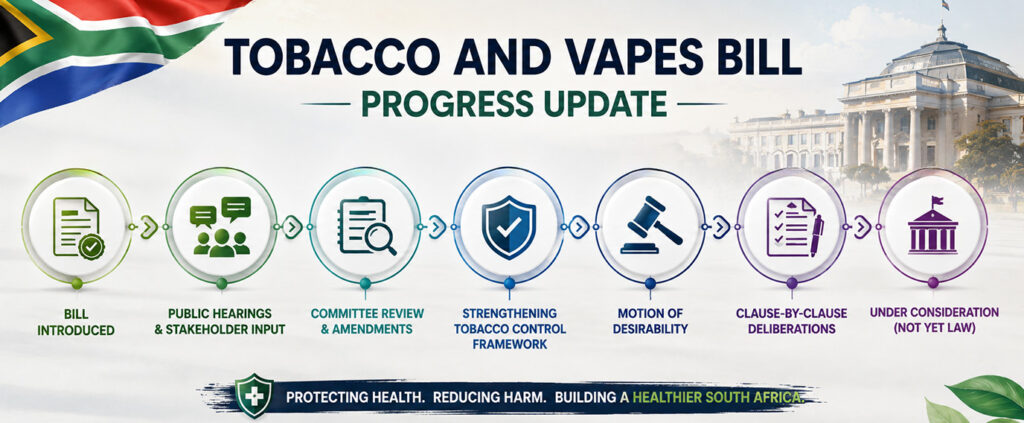
The UK and South Africa have both pursued major legislative changes covering tobacco and vaping products. The UK Tobacco and Vapes Bill strengthened vape regulations and introduced a generational ban on tobacco sales for people born on or after January 1, 2008, while the South Africa Tobacco and Vapes Bill has progressed through multiple legislative stages since its introduction in 2022. The timeline below highlights the key milestones in the Bill’s development.
| Date | Progress Update |
| December 9, 2022 | The Bill (B33-2022) was introduced in the South African Parliament. |
| 2023 | Parliament conducted public hearings and collected submissions as part of the legislative process. |
| March 5, 2026 | The Portfolio Committee on Health reviewed responses from public hearings and discussed possible amendments to strengthen the Bill. |
| June 24, 2026 | The Portfolio Committee on Health adopted a motion of desirability, allowing the Bill to move forward into detailed clause-by-clause consideration. |
| August 12, 2026 | The committee officially began clause-by-clause deliberations, focusing on the preamble and key definitions, including the distinction between combustible and non-combustible products. |
| August 2026 | The Bill remains under parliamentary consideration and has not yet become law. |
What Does the Tobacco and Vapes Bill Regulate
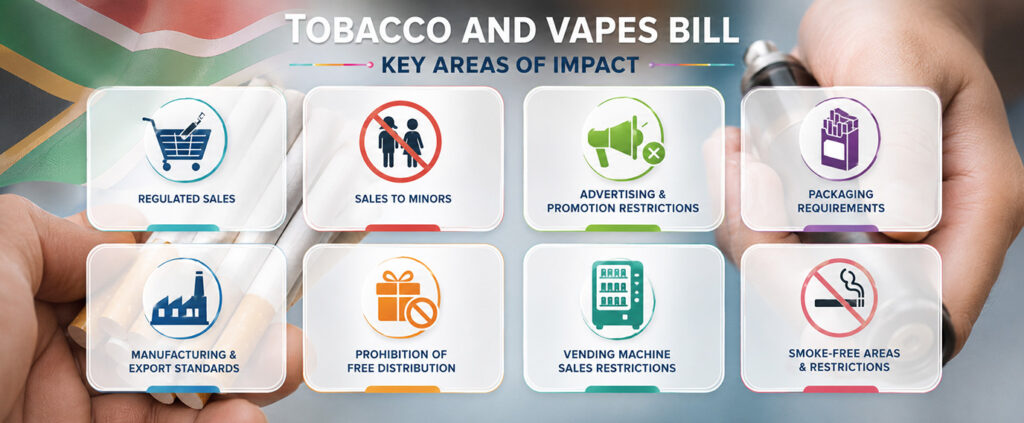
The Bill (B33-2022) is not a vape ban. Instead, it is a proposed regulatory framework covering traditional tobacco products and electronic delivery systems, including vape devices such as disposable vapes and pod systems.
The proposed framework would regulate:
- Sales of tobacco products and electronic delivery systems
- Restrictions on sales to minors
- Advertising and promotion controls
- Product packaging, appearance, and standardised packaging requirements
- Manufacturing and export standards
- Restrictions on free distribution
- Restrictions on vending-machine sales
- Smoke-free areas and smoking restrictions
How Does the Tobacco and Vapes Bill Differentiate Combustible and Non-Combustible Products
One of the key developments from the August 2026 parliamentary review was the committee’s formal recognition of the difference between combustible and non-combustible products.
Under the proposed framework of the Tobacco Products and Electronic Delivery Systems Control Bill (B33-2022), this distinction could play an important role in shaping how different tobacco and nicotine products are regulated in South Africa.
Combustible products are tobacco products that rely on burning tobacco, such as traditional cigarettes, to produce smoke and deliver nicotine. Non-combustible products do not rely on tobacco combustion. Electronic delivery systems, including disposable vapes and pod systems, are generally considered non-combustible products because they produce an aerosol rather than smoke. Beyond vape products, some other alternative nicotine products, such as nicotine pouches, are also generally considered non-combustible nicotine products.
For vapers, this distinction is important because South Africa’s future regulatory framework may set different rules for electronic delivery systems and traditional combustible tobacco products.
How Could the Tobacco and Vapes Bill Affect Vapers in South Africa
For South African vapers, the most important point is that the August 2026 parliamentary review does not introduce immediate changes to current vaping rules. The Tobacco and Vapes Bill is still under consideration and has not yet become law.
If the Bill eventually passes, future regulations may affect several areas below:
- Product availability
- Packaging and product information requirements
- Age verification regulations
- Advertising and promotion restrictions
- Public vaping rules
Conclusion
South Africa’s Tobacco and Vape Bill has entered the parliamentary review stage, with lawmakers now examining the specific provisions that could shape future tobacco and vape regulations.
The recognition of differences between combustible and non-combustible products marks an important part of the country’s efforts to modernise its nicotine regulatory framework.
As parliamentary discussions continue, further regulation updates will determine how South Africa’s future vaping rules are ultimately structured.