If you’re trying to cut back on vaping or move away from e-cigarettes, you may be wondering what to use instead. Nicotine gum, nicotine pouches, and nicotine strips can all deliver nicotine without inhaling electronic cigarette aerosol, but they do not work in the same way and are regulated differently in the U.S.
In this guide, we’ll compare the three products, explain how they deliver nicotine, and look at their FDA regulatory status so you can see how they differ and which option is your best vaping alternative.
Table of Contents
1. Why Are Vapers Looking for Alternatives to Vaping?
Not everyone looking for an alternative to vaping wants to quit nicotine. Some people simply want to vape less, avoid inhaling vape aerosol, or have a nicotine option for places where vaping is not allowed. Others may want to quit nicotine and manage cravings during nicotine withdrawal.
For these reasons, some vapers may consider nicotine gum, pouches, and strips as alternatives to vaping. These products can provide nicotine without inhaling e-cigarette aerosol, while offering different ways to use nicotine.
2. What Are Nicotine Pouches, Gum, and Strips?
Nicotine gum is a type of nicotine replacement therapy (NRT) approved by the FDA to help adults quit smoking. It looks and feels similar to regular chewing gum, but it contains nicotine that is released when you chew it.
Nicotine pouches are small oral products that contain nicotine and are designed to be used in the mouth. They are typically tobacco-leaf-free and do not require chewing.
Nicotine strips are thin oral products designed to dissolve in the mouth and release nicotine. Depending on the product, they may dissolve on the tongue or inside the cheek.
3. Nicotine Gum vs Pouches vs Strips: What’s the Difference?
All three oral nicotine products deliver nicotine without vaping, but they differ in how they are used, how nicotine is released, and how long they typically stay in the mouth.
| Feature | Nicotine Gum | Nicotine Pouches | Nicotine Strips |
| How it’s used | Chewed briefly, then “parked” between the cheek and gum | Placed between the upper lip and gum | Placed in the mouth and allowed to dissolve |
| Requires chewing? | Yes | No | No |
| Produces vapor? | No | No | No |
| Nicotine strength | Commonly 2mg or 4mg per piece | Varies by product, authorized products include strengths such as 2mg, 3mg, 4mg, 9mg, and 11mg | Varies by product, commonly available in strengths such as 2 mg per strip |
| Nicotine release | Released through chewing and “parking” | Gradually released while the pouch is in the mouth | Released as the strip dissolves |
| Typical time in mouth | About 30 minutes, depending on product instructions | Often around 30–60 minutes, depending on the product | Usually a few minutes, depending on the product |
4. Nicotine Products User Guides
Although all three nicotine products are used orally, they differ in how nicotine is released and absorbed.
How Does Nicotine Gum Work?

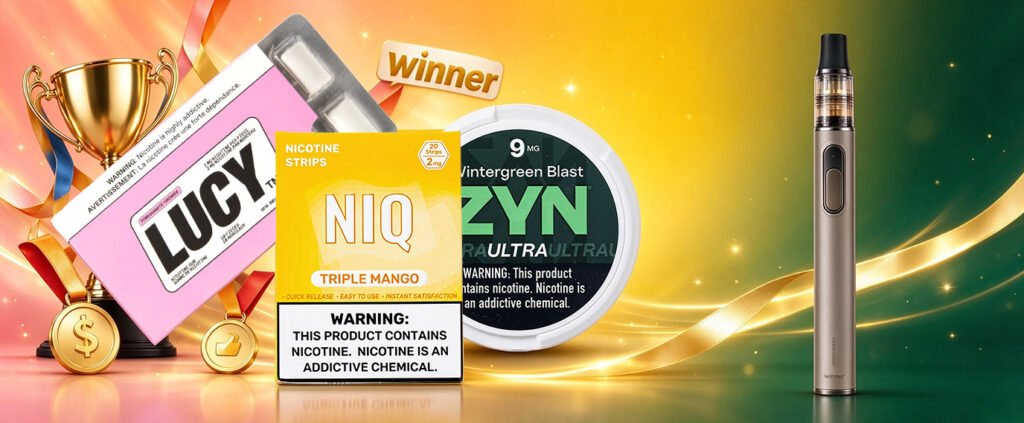
Taking Lucy nicotine gum as an example, it works a little differently from regular chewing gum. You chew it a few times to release nicotine, then “park” it between your cheek and gum. The nicotine is absorbed through the lining of your mouth rather than being inhaled.
How to Use Nicotine Pouches?
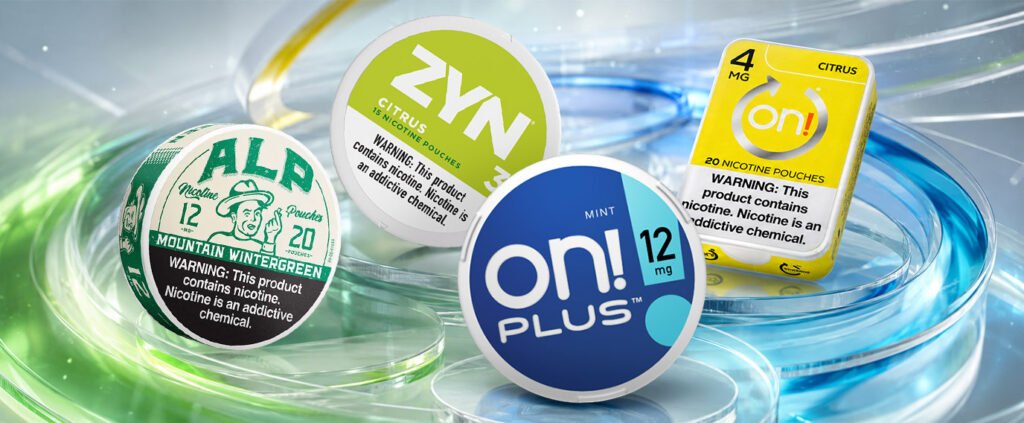
You can place a ZYN nicotine pouch between your upper lip and gum, where it sits while nicotine is gradually released. The nicotine is absorbed through the gums and lining of the mouth without the need to inhale or chew.
What Do Nicotine Strips Do?
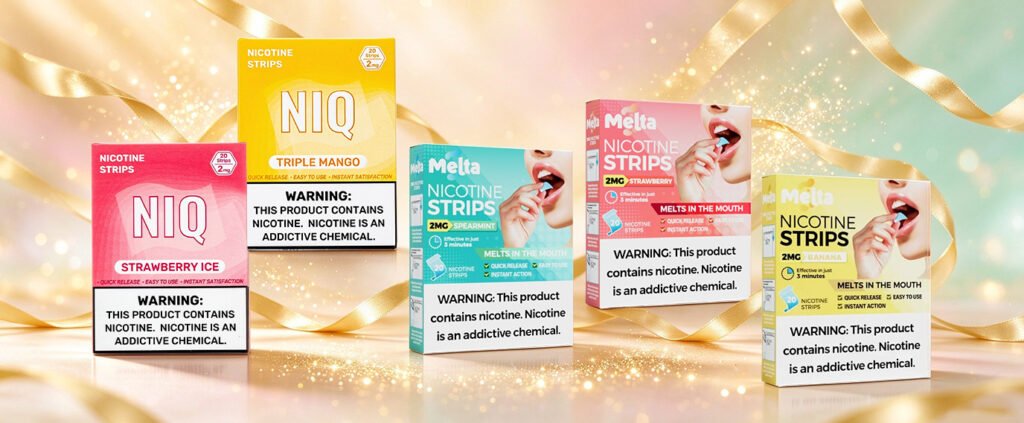
Nicotine strips (e.g., NIQ, Melta) dissolve in the mouth and release nicotine as they break down. The nicotine can then be absorbed through the lining of the mouth, so there is no need to chew or inhale.
5. How Are Nicotine Gum, Pouches, and Strips Regulated in the U.S.?
Although nicotine gum, pouches, and strips all deliver nicotine orally, they are not regulated under the same FDA framework.
Is Nicotine Gum FDA Approved NRT?
Yes. Nicotine gum is an FDA-approved nicotine replacement therapy (NRT) for smoking cessation. It is available over the counter and provides measured amounts of nicotine to help adults manage cravings and nicotine withdrawal during smoking cessation.
What Nicotine Pouches Are FDA Approved?
Nicotine pouches are regulated as tobacco products in the U.S., and specific nicotine pouch products can receive FDA marketing authorization through the premarket tobacco product application (PMTA) pathway.
As of September 2026, the FDA lists 43 nicotine pouches authorized for sale in the United States. However, FDA authorization does not mean that these products are “FDA-approved” or FDA-approved NRTs.
What About Nicotine Strips?
Nicotine strips may also fall under FDA tobacco-product regulation when marketed as tobacco products, but their regulatory status depends on the specific product.
For example, in May 2026, the FDA-issued warning letter stated that Hyde Nic Strips–Cool Mint 2mg was a new tobacco product without the required FDA marketing authorization order.
Therefore, the FDA status of nicotine strips should be checked on a product-by-product basis.
6. Which Nicotine Product is the Best Alternative to Vaping?
There is no single nicotine product that works best for everyone. Each has its own advantages and drawbacks, depending on how you prefer to use nicotine.
| Product | Pros | Cons | May Fit You If… |
| Nicotine Gum | FDA-approved NRT for smoking cessation; widely available; no inhalation | Requires chewing and “parking”; may be less convenient or discreet for some users | You want an FDA-approved NRT and don’t mind chewing |
| Nicotine Pouches | No chewing; discreet; no inhalation or aerosol | Not an FDA-approved NRT; FDA status depends on the specific product | You want a discreet, no-chew oral nicotine option |
| Nicotine Strips | No chewing; dissolves in the mouth; no inhalation or aerosol | FDA status depends on the specific product | You prefer a dissolving oral nicotine product |
| Vaping | Delivers nicotine through inhaled aerosol; no chewing or oral placement required | Requires inhaling aerosol; may not be allowed in some places | You prefer inhaled nicotine rather than oral nicotine products |
7. Conclusion
In this vaping guide, we’ve covered how nicotine gum, pouches, and strips work, what sets them apart, and how they are regulated in the U.S. Ultimately, the best vaping alternative depends on your needs and preferences.
8. FAQs
Q1: What can I replace vaping with?
If you want nicotine without inhaling vape aerosol, options include nicotine gum, nicotine pouches, or nicotine strips. They differ in how they deliver nicotine and how they are regulated in the U.S.
Q2: What is the difference between Nicotine Gum, Pouches, and Strips?
Nicotine gum releases nicotine through chewing and “parking,” nicotine pouches gradually release nicotine while placed between the upper lip and gum, and nicotine strips release nicotine as they dissolve in the mouth. They also differ in typical use time, nicotine strengths, and FDA regulatory status.
Q3: Are nicotine pouches FDA approved?
No. Nicotine pouches are not “FDA approved.” However, specific nicotine pouch products can receive FDA marketing authorization, which allows them to be lawfully sold in the U.S. As of September 2026, the FDA had authorized 43 nicotine pouches for sale in the United States.
Q4: What are nicotine strips?
Nicotine strips are thin oral products that contain nicotine and dissolve in the mouth to release it. Depending on the product, they may be placed on the tongue or inside the cheek, where nicotine is absorbed through the lining of the mouth. They do not require chewing or inhaling.