If you vape, you’ve probably wondered about this at some point: Can you vape in public, or is vaping in public illegal?
There isn’t one universal answer. In the U.S., vaping rules can vary by state, city, county, and even the specific place you’re visiting. Some outdoor areas allow vaping, while others restrict it. Indoor vaping is often subject to even stricter rules, and businesses or private properties may also have their own policies.
So, whether you can vape in public depends on where you are and which rules apply there. For U.S. vapers, what matters is knowing the laws and policies that apply where you are.
Table of Contents
Can You Vape in Public?
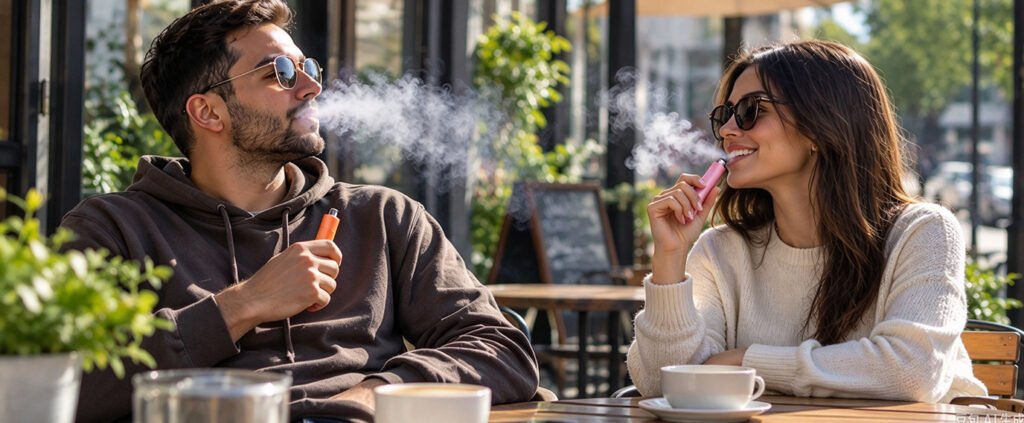
In the U.S., whether you can vape in a public place depends on where you are. State and local governments can set different restrictions, while businesses, workplaces, or other private properties may have their own no-vaping rules.
That means a rule that applies in one place may not apply a few miles away. Even outdoor vaping can be restricted in certain locations, so being outside doesn’t automatically mean vaping is allowed.
California is one example. State law prohibits the use of vapes in covered enclosed workplaces. Local governments can also adopt additional smoke-free restrictions in certain outdoor areas.
New York also has specific restrictions on public vaping. Under New York Public Health Law Section 1399-O-2, vaping is prohibited in several public outdoor areas, including ticketing, boarding, and platform areas at railroad stations operated by the Metropolitan Transportation Authority (MTA) or its subsidiaries. The section also prohibits smoking and vaping within 100 feet of the entrances, exits, or outdoor areas of public and private elementary and secondary schools, subject to exceptions specified in the law.
These rules show that being outside does not mean you can vape. Before taking a hit, check the local rules and look for any no-vaping signs or venue policies.
Is Vaping Indoors Allowed in the United States?

Vaping indoors is generally subject to more restrictions than vaping outdoors in many parts of the U.S. According to the CDC, as of September 30, 2024, 20 states, Washington, D.C., and Puerto Rico had comprehensive smoke-free indoor-air laws that include e-cigarettes. These laws prohibit smoking and vaping in indoor areas of private workplaces, restaurants, and bars.
The CDC also notes that its STATE System is based on state-level laws and does not include measures adopted by counties, cities, or other local governments. Individual businesses and properties may also have their own no-vaping policies. Some indoor spaces may also detect vaping with vape detectors and alert staff when it occurs.
So, can you vape inside? Sometimes—but you should not assume that indoor vaping is allowed simply because you do not see a no-vaping sign.
What Happens When You Vape Around Other People?
Knowing where vaping is allowed is only part of the question. It’s also worth considering what people around you may be exposed to when you vape.
Vapes do not produce traditional cigarette smoke. Instead, they heat e-liquid and create an aerosol made up of small particles and droplets. Some of the aerosol is exhaled into the air, where people nearby may breathe it in.
What Is Secondhand Aerosol?
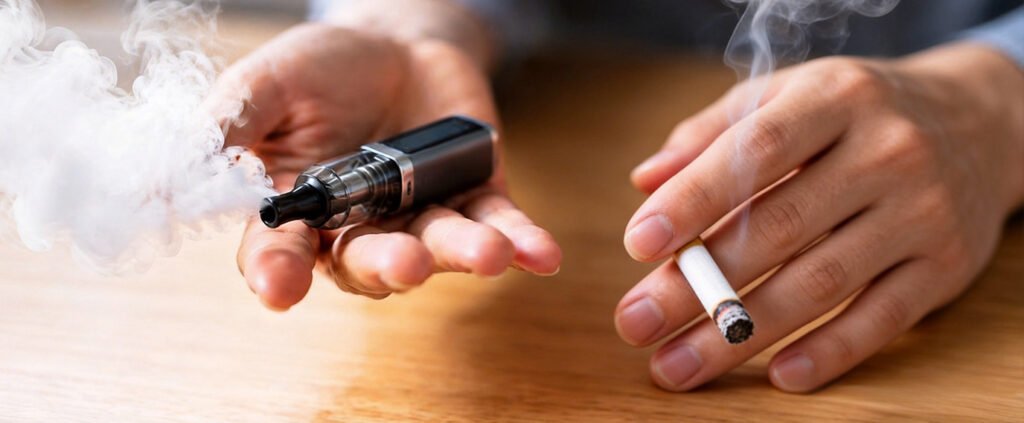
Secondhand e-cigarette aerosol is the aerosol released into the air when someone vapes. You may hear people call it “second hand vape smoke,” but “secondhand aerosol” is more accurate. Vape aerosol and cigarette smoke are different, although both can expose people nearby to substances released during use.
Can You Get Second Hand Smoke from a Vape?
Not exactly. A vape doesn’t produce the smoke associated with burning tobacco. The exposure comes from the aerosol released during vaping.
Is Secondhand Vape Aerosol Harmful?
There is no need to exaggerate the issue, but it isn’t accurate to say that secondhand vape aerosol is harmless.
The EPA says research indicates that e-cigarettes can emit potentially harmful substances and that secondhand exposure may pose health risks. At the same time, the agency says more research is needed to fully understand e-cigarette emissions and their effects on human health.
In other words, second hand vape aerosol isn’t the same as cigarette smoke, but it can still expose people nearby to substances from an e-cigarette.
How Can You Tell If Vaping Is Allowed Somewhere?
Because the rules can vary so much, there isn’t always a simple nationwide answer. When you’re unsure, there are a few things to check.
(1) Check the Local Laws
State law may set the basic rule, but a city or county may have additional restrictions. If you’re visiting somewhere unfamiliar, check the local rules rather than assuming the laws are the same as where you normally vape.
(2) Find the Designated Areas for Vaping/Smoking
A restaurant, workplace, school, hospital, transit facility, park, or other public location may have specific restrictions that apply to vaping. Look for the designated area for vaping if you must. Sometimes there is a special place for vapers. Otherwise, you can vape where smoking is allowed.
(3) Understand Property’s Different Policies
Even when state or local law does not prohibit vaping, a business or private property can establish its own no-vaping policy.
(4) Look for Signs or Ask
If you’re still unsure, look for posted no-vaping signs or ask the staff or property manager. To check it clearly before vaping.
Conclusion
So, is it illegal to vape in public? As this 2026 vaping guide makes clear, it depends on where you are. There’s no single nationwide rule that allows vaping everywhere or bans it everywhere. State and local laws can set their own restrictions, and businesses or private properties may have additional no-vaping policies. If you’re not sure, check the local rules and look for signs or ask before you vape.
FAQs
Q1: Is vaping in public illegal?
Not everywhere. Whether vaping in public is legal depends on the state, local jurisdiction, and the specific location. A place can also prohibit vaping through its own property rules even when state law does not ban it there.
Q2: Is secondhand vape smoke bad?
Secondhand vape aerosol is not the same as cigarette smoke, but it is not accurate to say that it is harmless. The EPA says e-cigarettes can emit potentially harmful substances and that secondhand exposure may pose health risks. However, more research is still needed to fully understand the effects of e-cigarette emissions on human health.
Q3: Can you vape inside?
In many U.S. states, vaping is prohibited in indoor workplaces, restaurants, and bars under laws that specifically include e-cigarettes. Other states may have different rules, and local governments or individual businesses may impose additional restrictions.
Q4: Can you vape in an airport?
It depends on the airport. Some airports may have designated smoking or vaping areas, while others may restrict vaping throughout the airport. Check the airport’s rules before vaping and use a designated area if one is available.