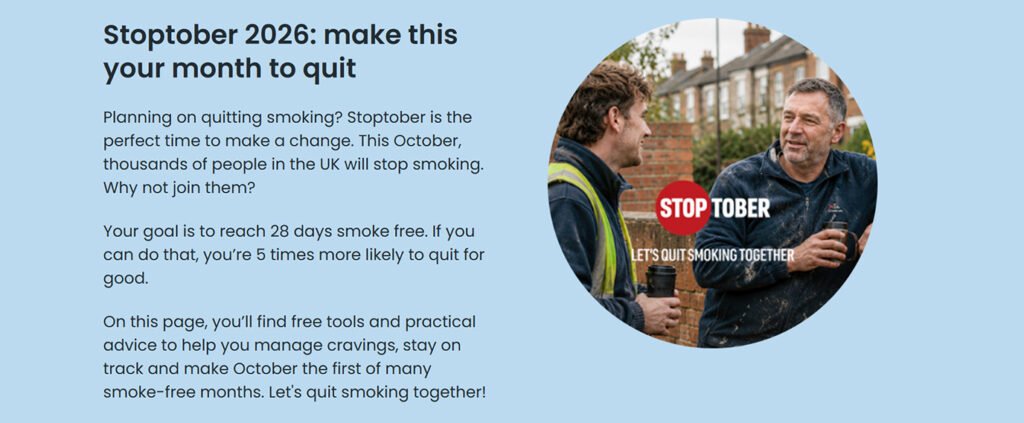
Thinking about switching from smoking to vaping this Stoptober? If you’re an adult smoker who wants to quit cigarettes, October could be a good time to get started. Stoptober is the UK’s annual stop-smoking campaign, encouraging people to go 28 days without smoking and offering free resources to help them manage nicotine cravings and keep going when things get tough. This guide covers what you need to know about Stoptober, switching to vaping, and finding support to quit smoking.
Table of Contents
1. What Is Stoptober?
Stoptober is a UK stop-smoking campaign launched in 2012. It encourages smokers to give up cigarettes for 28 consecutive days in October, with practical tools and support to help them through the process.
According to the NHS, people who stay smoke free for 28 days are five times more likely to quit for good. Free resources and support include the NHS Quit Smoking app, a Personal Quit Plan, and advice on managing nicotine cravings and withdrawal symptoms. Smokers can also seek support from local stop-smoking services.
2. When Does Stoptober 2026 Start?
Stoptober 2026 officially began on October 1. The UK government’s campaign resources were available from September 17 through November 1, giving smokers time to prepare before October and access campaign materials during the campaign.
If you haven’t started yet, you can still make a quit plan and take steps toward becoming smoke-free. You don’t have to wait until next October to start quitting.
3. To-do List for Stoptober 2026

Stoptober is a nationwide campaign rather than a single in-person event. Its central challenge is to stay smoke free for 28 days, with free tools and support available to help participants along the way.
(1) More Quit Attempts If You Tried Before
If you’ve tried to quit smoking before but started again, don’t be discouraged. Quitting can take several attempts, and going back to smoking doesn’t mean you’ve failed or that you cannot quit. Each attempt can help you understand what triggers your cravings and what makes quitting more difficult.
A practical starting point is to choose a quit date, identify situations that trigger the urge to smoke, and plan how to respond to cravings. You can also use the NHS Quit Smoking app, create a Personal Quit Plan, or contact a local Stop-Smoking Service for additional support.
(2) Quit Smoking with Vaping
If you find it difficult to quit cigarettes, switching to vaping is another option for adult smokers to consider. The NHS’s Vaping Myths and Facts page explains that vaping exposes vapers to fewer toxins and at lower levels than smoking cigarettes. However, vaping is not risk-free, and its long-term health effects are not yet fully understood.
To get the full benefits of switching, you need to stop smoking cigarettes completely. Continuing to smoke while vaping does not provide the same benefits as switching entirely. Vaping is not harmless, and children and non-smokers should not start.
4. Positive Impact of Quitting
Quitting smoking can improve your health and daily life. It may reduce stress, improve your mental well-being, and help protect the people around you.
(1) Improved Mental Health
Smoking may feel like a way to take the edge off stress, but that relief is often temporary. As the effects of nicotine wear off, you may start feeling irritable, anxious, or restless, making you want another cigarette. Smoking can briefly ease these feelings, but it also keeps the cycle of nicotine dependence going.
After quitting, you may still experience nicotine withdrawal symptoms such as irritability, restlessness, and difficulty concentrating, particularly during the first few days. However, according to UK Public Health Guidance on Smoking and Mental Health, quitting smoking is associated with reduced anxiety, depression and stress, along with a better mood and improved psychological quality of life.
Over time, these changes can help you feel calmer, more positive and better able to manage everyday stress.
(2) Quitting Benefits Others Around You
Quitting smoking also protects the people around you, especially family members and children. Secondhand smoke exposes others to harmful tobacco chemicals and increases the risk of cardiovascular disease, lung cancer, and chronic obstructive pulmonary disease (COPD). Children and people with existing health conditions are particularly vulnerable to these risks.
Ultimately, switching completely to vaping can prevent others from being exposed to smoke from burning tobacco. Better still, quitting both smoking and vaping is the best way to avoid exposing others to either.
5. How to Quit Smoking with Vaping?
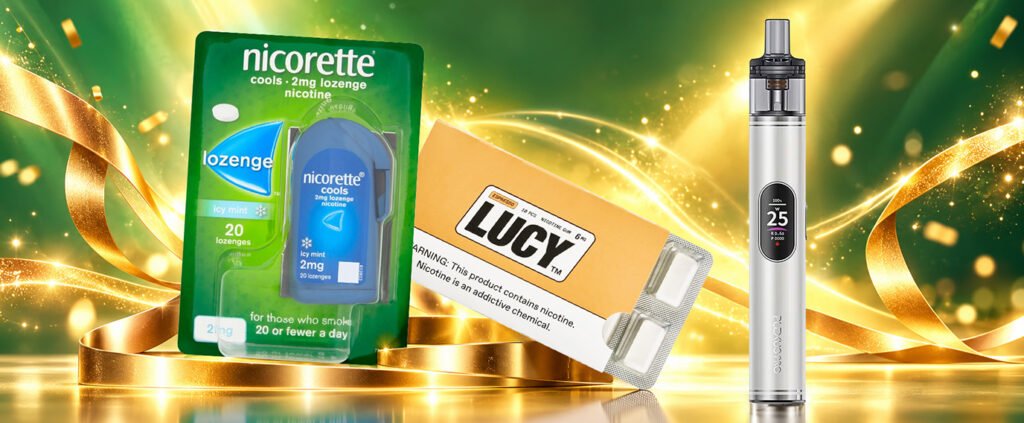
If you’re an adult smoker considering vaping as a way to quit cigarettes, the following steps may help you plan your transition:
(1) Choose a Suitable Vape and Nicotine Strength
Different devices and nicotine strengths suit different needs. Choose an e-cigarette that is easy to use and a nicotine strength that helps manage your cravings. Your choice may depend on how much you smoke and how strongly you experience withdrawal symptoms. Most importantly, check that the vapes comply with the laws and regulations in your location.
In the UK, single-use vapes have been banned since June 1, 2025. In the U.S., restrictions vary by state and may include flavor bans and limits on which products can be legally sold. Check the latest UK Tobacco and Vapes Bill and U.S. Vape Bans by State before choosing a product.
(2) Prepare for Cravings and Withdrawal
Cravings can be triggered by routines, stress, or situations in which you would normally smoke. Identify your triggers in advance and plan alternative activities or coping strategies. If you use vaping to quit smoking, make sure your device and nicotine strength are suitable for managing your cravings.
(3) Use Other Stop-Smoking Support
Vaping is not the only option available. The NHS offers a free Quit Smoking app, a Personal Quit Plan and access to local stop-smoking services. According to GOV.UK guidance on stop-smoking options, smokers can choose from different approaches, including nicotine replacement therapy (NRT), such as nicotine gum, patches, inhalers and lozenges, or getting support from a trained stop-smoking adviser.
6. Final Thoughts
As this vaping guide explains, Stoptober offers smokers a structured opportunity to try quitting cigarettes. For adult smokers who are considering switching, nicotine vaping may help manage cravings and support the transition away from smoking. However, vaping is not risk-free. If you choose to switch, quitting cigarettes completely is important to gain the full benefits of moving away from smoking.
7. FAQs about Stoptober 2026
Q1: Is Stoptober about quitting smoking or vaping?
Stoptober is a UK campaign focused on quitting smoking. It encourages people to stay smoke-free for 28 days and provides resources to support their quit attempts.
Q2: Can I start Stoptober after October 1?
Yes. Although the 2026 campaign officially began on October 1, you can still make a plan to quit smoking and get started. You do not need to wait until next year to seek help.
Q3: Is vaping safer than smoking cigarettes?
According to the NHS, nicotine vaping is less harmful than smoking, but it is not risk-free. Its long-term effects are not yet fully understood, and the full benefits of switching are only achieved when you stop smoking completely.
Q4: Where can I find official Stoptober and quit-smoking resources?
You can find the latest Stoptober information and free quit smoking support through the official NHS website and the UK government’s Stoptober campaign resource page.