When people use THC at night, they usually aren’t looking for a lecture about sleep science. They simply want one thing: to finally fall asleep. Maybe your brain won’t slow down. Maybe your body still feels tight and overstimulated long after the day is over. Maybe you’re exhausted, but somehow still too mentally “on” to actually drift off. That’s exactly why THC has become such a common part of nighttime routines. For many users, it feels like one of the few things that can actually help them shut down and sleep.
But there’s a more important question hiding underneath that experience: is THC actually improving your sleep, or is it simply making you sleepy enough to pass out? Those two things may feel similar in the moment, but they are not the same. Falling asleep faster does not automatically mean you are sleeping better, recovering better, or getting the kind of sleep your body and brain actually need.
That’s where THC becomes more complicated than most people expect. For some users, it can absolutely make nights easier. But it may also change how sleep is structured, reduce REM sleep, lose effectiveness over time, and make sleep feel worse when regular use stops. So if you’ve ever wondered whether THC is really helping your sleep—or just helping you get through the night—this is the conversation worth having.
Why Does THC Feel So Effective at Night?
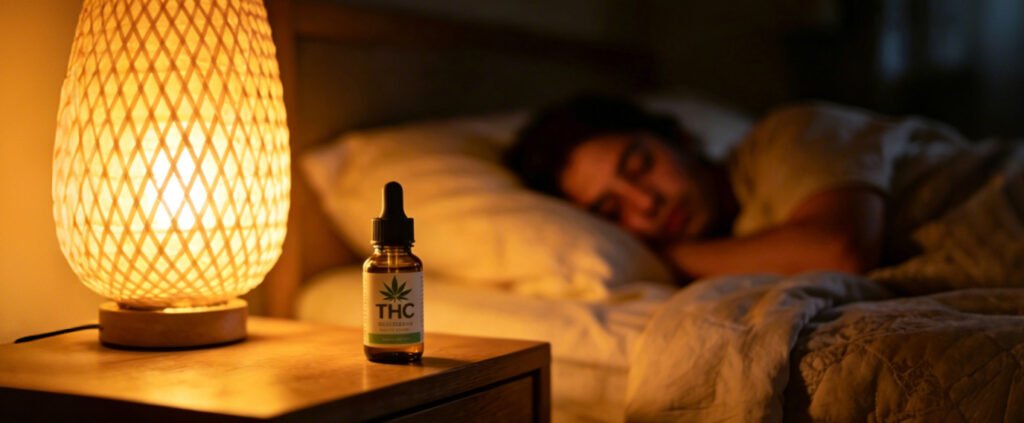
The reason THC has earned such a strong reputation as a nighttime tool is simple: for a lot of people, it genuinely feels like it works. That’s especially true when the main sleep problem isn’t “I’m not tired,” but rather “I can’t settle down.” A lot of sleep struggles don’t begin with a lack of fatigue. They begin with racing thoughts, physical tension, stress, overstimulation, body discomfort, or that frustrating state where you feel exhausted but still mentally alert.
In that kind of situation, THC may help not because it “creates sleep” directly, but because it lowers the barriers that are keeping sleep from happening naturally. It may make the body feel less tense, the mind less noisy, or discomfort less noticeable. And for many people, that shift alone is enough to make sleep feel much more accessible.
That’s an important distinction because feeling calmer and falling asleep more easily do not automatically mean your sleep has become healthier. Sometimes THC helps with the experience of bedtime, but not necessarily improve the deeper biological quality of sleep itself. That difference is easy to miss when all you want is relief, but it matters much more than most people realize.
Can THC Actually Help You Fall Asleep Faster?
For many users, the answer is yes—at least in the short term. One of the most commonly reported effects of THC is that it may reduce the time it takes to fall asleep. If your usual nighttime pattern involves lying in bed for an hour while your brain keeps spinning, that kind of change can feel huge. It’s one of the biggest reasons people start using THC as part of a sleep routine in the first place.
If it consistently helps you go from “awake and annoyed” to “finally asleep”, it’s easy to understand why it earns a permanent place in your nighttime lineup. But this is also where people often stop asking deeper questions too early. Falling asleep faster and sleeping better are not the same thing.
Compared to THC, CBD is more often associated with supporting real sleep quality rather than just sedation, and is generally considered to have more consistent sleep-improving potential.
A person can fall asleep quickly and still wake up feeling mentally dull, physically unrested, or strangely “off” the next day. You can also fall asleep more easily while still interfering with the deeper sleep processes that make rest truly restorative. So yes, THC may absolutely help with the “getting to sleep” part. But that’s only one layer of the story, not the full picture.
Does THC affect REM sleep?
Sleep is not just unconscious time. Throughout the night, your brain moves through different sleep stages, each of which plays a different role in recovery, memory, emotional processing, and mental reset. Good sleep isn’t only about how long you sleep. It’s also about whether your brain can move through those stages in a healthy, balanced way.
This is where THC gets more interesting—and more important. One of the biggest concerns is REM sleep, the stage most closely associated with vivid dreaming, emotional regulation, and certain forms of memory processing. Many users notice that when they use THC regularly, they dream less, or at least remember fewer dreams. For some people, that can feel like a benefit, especially if dreams are intense, stressful, or emotionally draining.
But less REM does not automatically mean better sleep. Sometimes it simply means a normal part of sleep is being dialed down. That’s one of the reasons THC can be misleading. It may make sleep feel quieter, heavier, or less emotionally intense while still changing what your brain is actually doing overnight. In other words, sleep can feel smoother on the surface while becoming less biologically complete underneath.
Can THC Start Hurting Your Sleep Over Time?
Yes—and this is where a lot of people get caught off guard. THC often feels most effective in the beginning. But what starts as “this really helps me sleep” can slowly shift into “I kind of need this now.” That transition doesn’t always feel dramatic in the moment. In fact, it often happens so gradually that people don’t notice it until they’ve already built a nightly dependence around it.
One reason is tolerance. Over time, the same amount of THC may not feel the same as it used to. Some users start taking more, reaching for stronger products, or using them more often just to recreate the original effect. Another reason is conditioning. When a certain ritual happens night after night, your body learns it. Eventually, sleep may start to feel less like something that happens naturally and more like something that only happens after THC.
That’s when the relationship changes. THC is no longer just a nighttime option—it starts becoming a requirement. And when sleep begins to depend on something external every single night, it often becomes less resilient over time, not more.

Why Does Sleep Often Feel Worse When You Stop THC?
This is one of the biggest reasons people come to believe THC is essential for sleep. They stop using it—and suddenly they can’t fall asleep, stay asleep, or feel rested at all. That experience is real, and for many people, it’s intense enough to make them go right back to using.
But this doesn’t always mean THC was truly fixing your sleep. In many cases, what you’re feeling is a rebound. If THC had been regularly changing your sleep pattern—especially REM sleep—then removing it can temporarily make sleep feel chaotic. That’s why many users report lighter sleep, more wake-ups, trouble falling asleep, and especially very vivid dreams when they stop.
That doesn’t necessarily mean your natural sleep is broken. More often, it means your brain is trying to recalibrate after getting used to THC being part of the equation. The problem is that many people mistake this adjustment period for proof that they “need” THC forever, when what they may actually need is time and a more stable sleep foundation.
How to Tell Whether THC Is Helping or Hurting Your Sleep?
The easiest way to think about it is this: helpful sleep support should make your sleep feel more stable, not more fragile. If THC is helping you fall asleep more easily without needing more and more over time, if you wake up feeling reasonably recovered, and if your use is still intentional rather than automatic, then it may be serving as a useful tool rather than becoming a crutch.
But if you need more THC to get the same result, if you wake up foggy or unrested, if your sleep falls apart when you stop, or if bedtime no longer feels possible without it, then the picture is probably changing. The same is true if you’re using THC to overpower stress, poor sleep habits, overstimulation, or an irregular schedule instead of actually addressing those problems.
That’s usually the line that matters. If THC is helping you sleep without weakening your sleep system, that’s one thing. But if it’s making your sleep more dependent, more chemically managed, and less natural over time, then it may not be helping in the way you think it is.
Final Take: THC May Help You Sleep, But That Doesn’t Mean It’s Helping Your Sleep
This is really the most important distinction. THC may absolutely help you get through the night. It may help you relax, quiet your mind, and fall asleep faster when your body or brain won’t cooperate. For some users, that short-term relief can feel incredibly valuable—and sometimes it is.
But whether it truly supports healthy, restorative, sustainable sleep is a much bigger question. For some people, THC may be a useful short-term tool. For others, it may slowly become something that makes sleep feel less natural, less stable, and more dependent over time.
So if you use THC at night, the smartest question isn’t simply “Does it help me sleep?” It’s this: is it helping my sleep stay healthy—or just helping me survive tonight?
That answer matters more than most people think.
FAQs
(1) Does THC help with insomnia?
THC may help some people fall asleep faster, especially if stress, tension, or discomfort are part of the issue. But that doesn’t mean it fixes the root cause of insomnia, and regular use may create other sleep-related tradeoffs over time.
(2) Why do I dream more when I stop using THC?
Many users experience vivid dreams after stopping THC because THC may reduce REM sleep during regular use. When you stop, your brain may temporarily “rebound”, making dreams feel stronger or more noticeable.
(3) Can THC make sleep worse over time?
Yes, for some users it can. Tolerance, sleep dependency, and changes in sleep structure may make sleep feel less natural and less restorative over time.
(4) How do I know if THC is helping my sleep or just sedating me?
A useful sign is how you feel over time. If you need more and more, wake up foggy, or feel like you can’t sleep without it, THC may be acting more like a “crutch” than real sleep support.