Vaping has become a growing challenge for many school principals, office managers, and public health officials. They are looking for clear answers to important questions: How do vape detectors work? Can these devices really detect vaping activity and help enforce no-vaping policies? This complete guide explains what a vape detector is, how vape detectors work, and where and how they are commonly used.
Table of Contents
What Is a Vape Detector
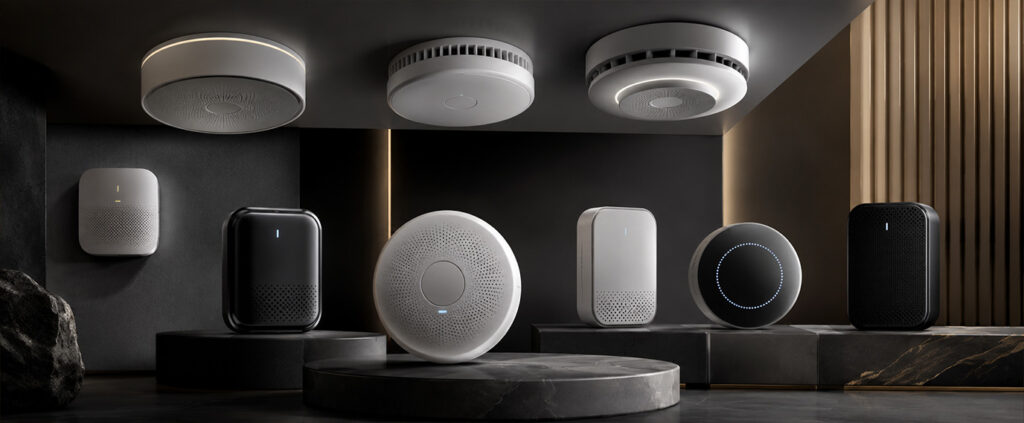
If you vape, you may have heard about vape detectors appearing in schools, hotels, and public buildings. But what exactly are these devices, and can they really tell when someone is vaping?
A vape detector is a smart indoor sensor designed to identify aerosol particles and chemical compounds produced by e-cigarettes and vaping devices. When vaping is detected, it can alert staff or security teams in real time so they can enforce no-vaping policies without relying on cameras in private spaces.
How Do Vape Detectors Work
Vape detectors work by monitoring the air and environment for particles or chemicals that are commonly associated with vaping.
Although the vapor produced by e-cigarettes (e.g., disposable vapes) dissipates quickly, they can still detect these vaping-related tiny aerosol particles, nicotine, THC-related compounds, and flavouring chemicals remaining in the air. Once they detect it, they will instantly send an alert to administrators, allowing them to intervene and respond quickly.
In simple terms, when someone exhales vapor, a vape detector works through five key steps to identify the vaping activity:
- Monitoring the air and tracking environmental changes in real time, including humidity changes.
- Detecting vaping-related signals, like aerosol particles and chemical compounds (e.g., PG, VG, nicotine, and flavorings).
- Analyzing signals and collected data, and comparing them with normal background air conditions
- Judging and confirming the vaping activity relying on their detection algorithms, advanced systems, and machine learning, etc.
- Sending instant alerts to staff, security teams, or administrators through an app, text message, or connected monitoring platforms.
Beyond their impressive detection capacities, what truly stands out about vape detectors is their speed. In many cases, these devices can recognize environmental changes within minutes after vaping and send alerts before the vapor completely disappears from the air.
Where Are Vape Detectors Commonly Used
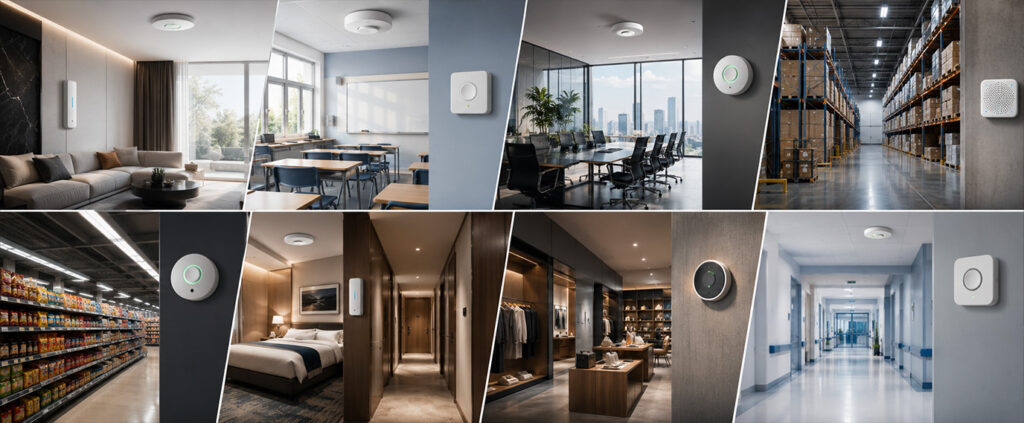
To keep vape detectors out of reach and reduce the risk of tampering or damage, they are typically installed on ceilings or high up on walls. This placement allows them to provide discreet monitoring and act as a subtle deterrent in the following locations:
- School bathrooms
- Locker rooms and changing rooms
- Dormitories and residence halls
- Stairwells and hidden common areas
- Healthcare and patient areas
- Libraries and municipal buildings
- Retail and quick-service restaurants
- Workplaces and offices
Above are the most common locations for deploying vape detectors. In general, vape detectors can be installed in any indoor area where vaping may be difficult to monitor or where traditional monitoring means, such as cameras, are not appropriate.
Among these locations, schools are one of the most common applications for vape detection systems. Vape detectors are increasingly installed in schools where the underage may misuse e-cigarettes secretly. Such devices can detect the traces and allow the school stuff to notice and prevent underage vaping at the campus. For example, according to ABC7 WWSB, North Port High School will install a vape detection system to address vaping on campus.
Can Vape Detectors Detect All Types of Vapes
When you ask me “Can Vape Detectors Detect All Types of Vapes?”, my answer is: Not exactly. Vape detectors are not designed to identify the vape device itself. Whether vapers use disposable vapes, pod systems, vape pens, or another type of vaping device, the detectors detect airborne signals left behind by vaping, including aerosol particles, chemical markers, and changes in environmental conditions.
When someone vapes, the device heats e-liquid and creates an aerosol containing tiny particles and chemical compounds. The detectors monitor these changes and analyze whether the detected pattern matches the characteristics of vaping activity.
What Factors Affect Vape Detection
Although vape detectors can detect many types of vaping activity, their performance is not the same in every situation. Several factors can affect how quickly and accurately a vape detector identifies vaping:
- Amount of aerosol produced: More vapor usually creates stronger aerosol and chemical signals, making detection easier.
- Space size and airflow: Smaller enclosed spaces may allow vapor signals to build up, while strong airflow can disperse them more quickly.
- Distance from the vape detector: The farther vaping occurs from the sensor, the weaker the detected signals may become.
- Vape detector technology and detection methods: Advanced systems using multiple sensors, such as particle, chemical, and humidity detection, can improve accuracy.
- Surrounding environmental conditions: Steam, sprays, perfumes, and humidity changes may affect readings, so detectors use filtering to separate vaping signals from normal air changes.
Vape detection depends on more than the vape itself. Factors like aerosol amount, space conditions, airflow, sensor placement, and detection technology all affect vape detection accuracy.
Vape Detector vs Smoke Detector
Vape detectors and smoke detectors serve different purposes:
- Smoke detectors: Detect combustion-related smoke from fires and protect against fire hazards.
- Vape detectors: Identify vaping signals, such as aerosol particles, chemical markers, and air changes caused by e-cigarettes, and regulate unauthorized vaping.
| Comparison | Vape Detector | Smoke Detector |
| Purpose | Detect vaping activity and enforce no-vaping policies | Detect smoke and warn people about possible fires |
| What It Detects | Vape aerosol particles, chemical signals, and air changes | Smoke particles produced by combustion |
| Technology | Detect vaping-related signals via multi-sensor technology (particle, chemical, humidity) | Detect combustion smoke via photoelectric or ionization sensors |
| Alerts | Send private alerts to staff, security, or administrators | Trigger public alarms for evacuation |
| Common Locations | Schools, bathrooms, dorms, workplaces, and other vaping hotspots | Homes, offices, and buildings requiring fire protection |
Can a Smoke Detector Detect Vape?
Smoke detectors are designed to detect smoke from burning materials, not the aerosol produced by vaping. Since e-cigarettes heat e-liquid instead of burning tobacco, the particles and signals they produce are different from those detected by standard smoke alarms.
Do Vape Detectors Record You
If you ask me, “Can vape detectors catch you vaping?” the answer is yes. But if you ask, “Do vape detectors record you?” the answer is no. Most vape detectors do not have cameras or record audio. They are designed to monitor air quality and detect vaping-related changes, not to watch or record people.
If a vape detector includes video or audio recording features, its use would be subject to additional privacy requirements, especially in sensitive areas such as bathrooms and locker rooms.
Instead, most vape detectors analyze environmental signals, such as aerosol particles and chemical markers associated with vaping. When vaping is detected, the system may record basic event details, such as the time and location of an alert, and notify staff or administrators.
In other words, vape detectors do not capture images, identify individuals, or listen to private conversations. However, if any monitoring system is used to collect personal information, relevant organizations should clearly explain how the data is collected and used.
Final Thoughts
Vape detectors provide schools, workplaces, and public facilities with a smarter way to monitor vaping activity, especially in areas where traditional monitoring methods are limited or not practical. Instead of using cameras, they detect vaping-related signals in the air and send real-time alerts when vaping activity is detected.
However, vape detectors are not a complete solution for eliminating vaping. They work best as part of a broader approach that combines technology, clear policies, and proper management.
When properly implemented, vape detectors can help create safer, more controlled indoor environments and provide additional support for vaping management.
FAQs
Q1: Can Vape Detectors Detect Disposable Vapes?
Yes, vape detectors can detect signals produced by disposable vapes if they create detectable aerosol particles and chemical markers, but detection performance can vary depending on factors such as vapor amount, room conditions, airflow, and sensor technology.
Q2: Can Vape Detectors Identify Who Is Vaping?
No. Most vape detectors can detect vaping activity, but cannot identify the specific person using a vape. Some systems may be connected to cameras or access-control systems to help investigate an event, but the detector itself does not know who is vaping.
Q3: Where Are Vape Detectors Usually Installed?
They are commonly installed in areas where vaping is difficult to monitor, such as school bathrooms, locker rooms, stairwells, workplaces, and other enclosed public spaces.
Q4: How Quickly Can a Vape Detector Detect Vaping?
Detection speed depends on the device model, sensor technology, and surrounding conditions. In many cases, vape detectors can identify vaping-related changes shortly after vapor is released and send alerts in real time.