If you’ve been wondering “Why is my disposable vape leaking?” or what should you do when it happens, you’re not alone. Disposable vapes are designed to be simple and sealed, so when e-liquid starts showing up around the mouthpiece, airflow holes, or even inside the device, it usually feels like something has gone wrong. But in most cases, leakage is less about a “broken device” and more about pressure changes, heat, and usage habits interacting with a small, tightly packed system.
Understanding why your vape is leaking makes it much easier to fix—and, more importantly, helps you know what you should do to avoid wasting devices that are still perfectly usable.
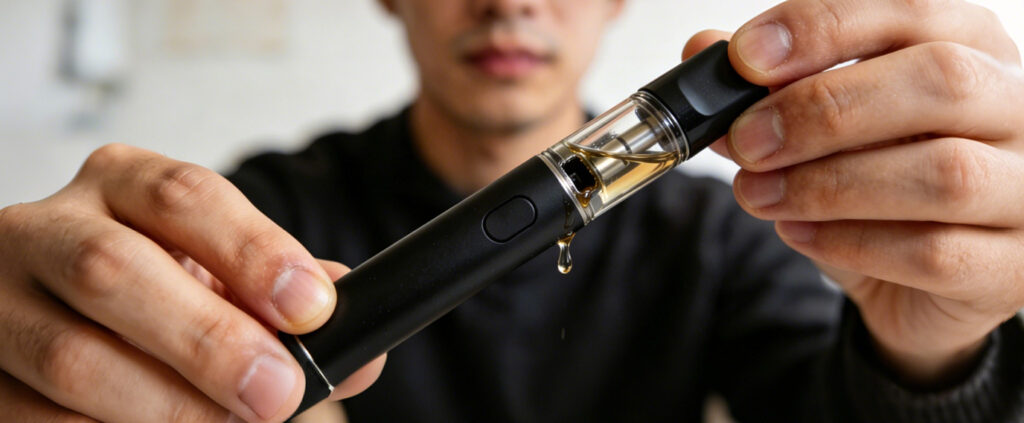
Table of Contents
What “Leaking” Actually Means in Disposable Vapes
Not every sign of liquid equals a real leak. In practice, users often mix up three different situations that look similar but behave differently.
The first is actual leakage, where e-liquid physically escapes from seals or airflow openings. The second is condensation, which naturally forms when warm vapor cools inside the mouthpiece or airway. The third is internal flooding, where excess liquid saturates the coil and airflow system, leading to gurgling, spitback, or weak vapor.
Condensation is normal. Flooding is usually temporary. True leakage is less common but more persistent. The challenge is that all three can feel the same in the moment, especially if you’re not familiar with how disposable devices behave internally.
Why Disposable Vapes Leak in the First Place
Even though disposables are sealed units, they are not immune to physical pressure, heat, or liquid movement. Most leakage issues trace back to a handful of predictable causes.
One of the most common is pressure imbalance. Disposable vapes rely on a stable internal environment. Still, everyday conditions like temperature changes, altitude shifts, or even carrying the device tightly in a pocket can push e-liquid toward the airflow channel. Once liquid moves into that area, it tends to escape through the mouthpiece or intake vents.
Heat is another major factor. Chain vaping or taking repeated long draws causes the coil to overheat, thinning the liquid temporarily and increasing internal vapor pressure. When that pressure builds faster than the wick can absorb liquid, the excess has nowhere to go except into the airflow system.
Manufacturing variation also plays a role. Disposable vapes are mass-produced, and small differences in seal tightness or silicone alignment can make some units more prone to seepage. You won’t always notice this immediately—it often shows up after the device has been used for a while or exposed to heat.
Flooding at the factory stage is another overlooked cause. Some devices arrive slightly over-saturated, especially in higher-capacity disposables. When the wick can’t stabilize that initial load of liquid, it pushes excess into the airway, creating early-life leakage or gurgling.
Storage habits matter more than most people realize. Leaving a vape on its side for long periods allows gravity to slowly move liquid into the airflow channel. It doesn’t cause sudden leaks, but it builds conditions that eventually lead to them.
How to Fix a Leaking Disposable Vape
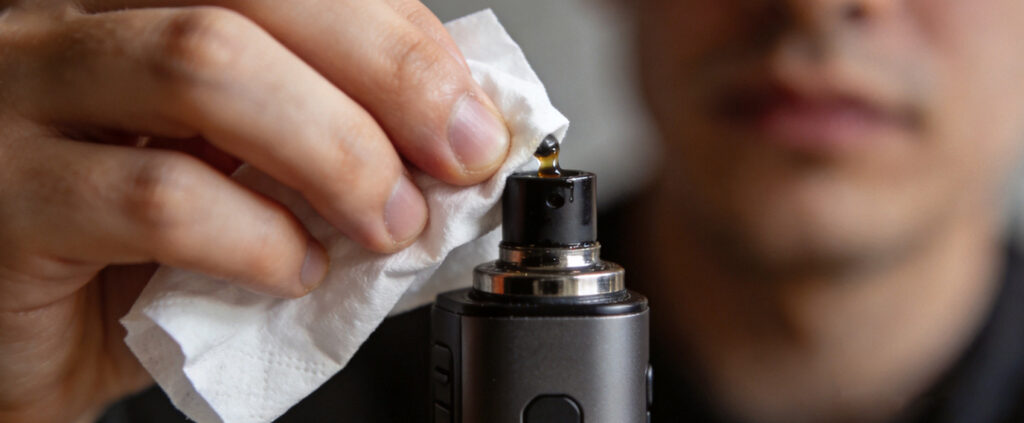
Most leakage issues don’t require replacing the device immediately. A few simple adjustments are often enough to bring it back to normal performance.
Start by clearing the mouthpiece and airflow inlet. A lot of what users interpret as “leakage” is actually pooled condensation sitting at the top of the airway. Removing it resets airflow and reduces spitback.
Next, keep the device upright and let it rest. Ten to fifteen minutes in a vertical position allows excess liquid to drain back into the coil chamber and re-stabilize the wick. This step alone solves a surprising number of cases.
If the device has been heavily used, pause vaping for a short period. Continuous draws don’t give the wick enough time to reabsorb liquid, which keeps the flooding cycle going.
You can also gently tap the device against a flat surface while keeping it upright. This helps redistribute trapped liquid away from the airflow path without shaking it aggressively. When you resume vaping, take slower and lighter draws. Strong suction pulls more liquid into the airway, which can restart the problem even after it has been partially fixed.
When Leakage Is Normal—and When It Isn’t
A small amount of moisture in the mouthpiece is part of normal operation. Every disposable vape produces condensation, especially after extended use or in humid conditions. This doesn’t indicate damage and usually disappears on its own.
Light gurgling after a long session is also fairly normal. It simply means the airflow chamber has a bit more liquid than usual and needs a short reset period.
Problems start when leakage becomes consistent or starts affecting performance. If liquid keeps appearing even after cleaning and resting, or if vapor output becomes weak and inconsistent, the issue is no longer just condensation.
A more serious warning sign is liquid reaching the battery section or leaking from the base of the device. At that point, it’s not just a performance issue—it becomes a safety concern, and the device should be discontinued.
How to Stop Disposable Vape from Leaking
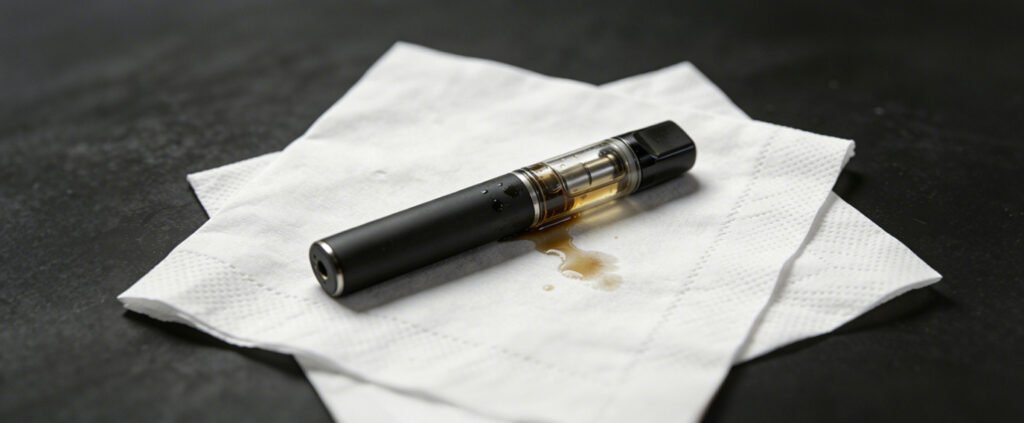
Preventing leakage is mostly about reducing stress on a sealed system that isn’t designed for aggressive use.
Keeping the device upright whenever possible is one of the simplest and most effective habits. It minimizes gravity-driven movement of liquid inside the chamber and reduces long-term buildup in the airflow path.
Avoiding chain vaping also makes a noticeable difference. Disposable coils are designed for short, spaced draws rather than continuous firing. Giving the wick time to reabsorb liquid keeps the system balanced and reduces internal pressure spikes.
Temperature control is another key factor. High heat environments thin the liquid and increase internal pressure, both of which make leakage more likely. Leaving a disposable vape in a hot car or direct sunlight is one of the fastest ways to trigger problems.
Physical pressure on the device should also be avoided. While disposables feel solid, squeezing them in tight pockets or bags can subtly shift internal liquid distribution and create long-term seepage issues.
Finally, smoother inhalation helps more than most users expect. Hard pulls don’t improve vapor quality—they usually just overload the airflow system and accelerate leakage conditions.
When It’s Time to Replace the Device
There is a point where troubleshooting stops being useful. If leakage continues after cleaning, resting, and adjusting usage habits, the internal structure has likely reached its limit.
Devices that leak into the battery area should be stopped immediately. E-liquid and electronics don’t mix safely, and continued use can create unnecessary risk.
If leakage is paired with burnt flavor, weak vapor, or constant gurgling, the coil system is usually no longer functioning properly. In disposable devices, this is the natural end of the product’s lifespan rather than something that can be repaired.
At that stage, replacement is not just the practical option—it’s the only reliable one.
Final Thoughts
Disposable vape leakage rarely comes from a single failure point. It’s usually the result of small pressure shifts, heat exposure, and usage patterns stacking up over time inside a sealed system.
Once you understand how these devices actually behave, leakage becomes far less random and much easier to control. In most cases, a few adjustments to how the device is stored and used are enough to reduce the problem significantly—something any basic vaping guide will emphasize.
The key takeaway is simple: disposables don’t suddenly fail—they gradually lose balance. Recognizing that process early is what keeps most devices working smoothly for as long as they’re designed to last.
FAQs
(1) Why is my disposable vape leaking from the mouthpiece?
This usually happens due to condensation buildup or internal flooding caused by chain vaping or pressure changes. In many cases, it is not a device failure and can be fixed by cleaning the mouthpiece and letting the device sit upright for a short time.
(2) How to stop disposable vape from leaking?
You can reduce leakage by keeping the device upright, avoiding chain vaping, and preventing overheating. Gentle inhalation and proper storage are also key to maintaining stable internal pressure.
(3) Is vape leaking the same as condensation?
Not always. Condensation is a normal byproduct of vapor cooling inside the mouthpiece, while true leakage involves actual e-liquid escaping from seals or airflow openings. Many users confuse the two.
(4) Why does my disposable vape leak after heavy use?
Heavy or continuous vaping can overheat the coil and thin the e-liquid, increasing internal pressure. This pushes excess liquid into the airflow system, resulting in leakage or gurgling sounds.
(5) Can a leaking disposable vape still be used safely?
If the leak is minor and only condensation or slight pooling, it is usually safe after cleaning. However, if e-liquid reaches the battery area or leakage is continuous, the device should be stopped immediately.