Nicotine-free vapes are not risk-free. While they eliminate nicotine exposure and reduce addiction risk, they still produce inhalable aerosols containing propylene glycol (PG), vegetable glycerin (VG), and flavoring compounds. Current evidence suggests they are likely less harmful than combustible cigarettes, but long-term health effects remain under investigation.
Table of Contents
Introduction
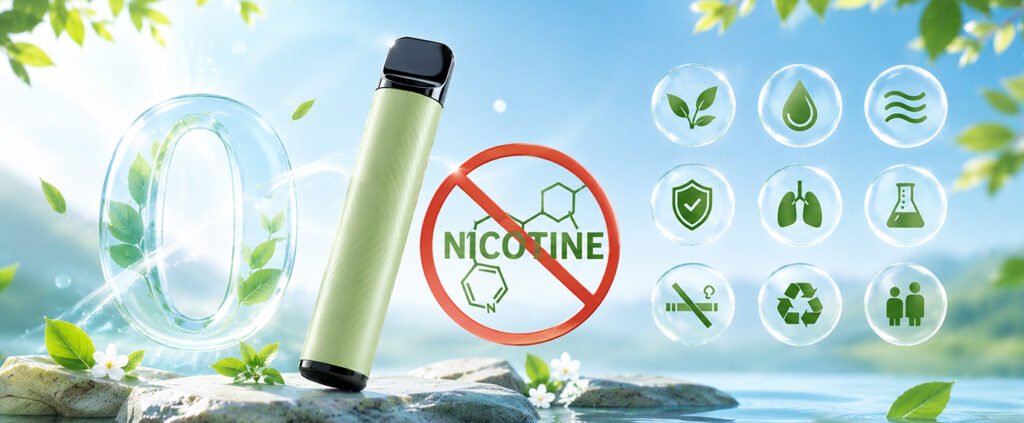
Nicotine-free vapes (0mg vapes) are increasingly searched by users asking whether vaping without nicotine is safer or still harmful. These devices remove nicotine but continue to deliver aerosol through heated e-liquids.
For many adults, nicotine-free vaping is used to avoid dependence, maintain habitual vaping behavior, or enjoy flavor-based experiences without nicotine exposure.
This article explains what nicotine free vapes are, how they work, and what current scientific evidence suggests about their safety and risks.
What Are Nicotine Free Vapes
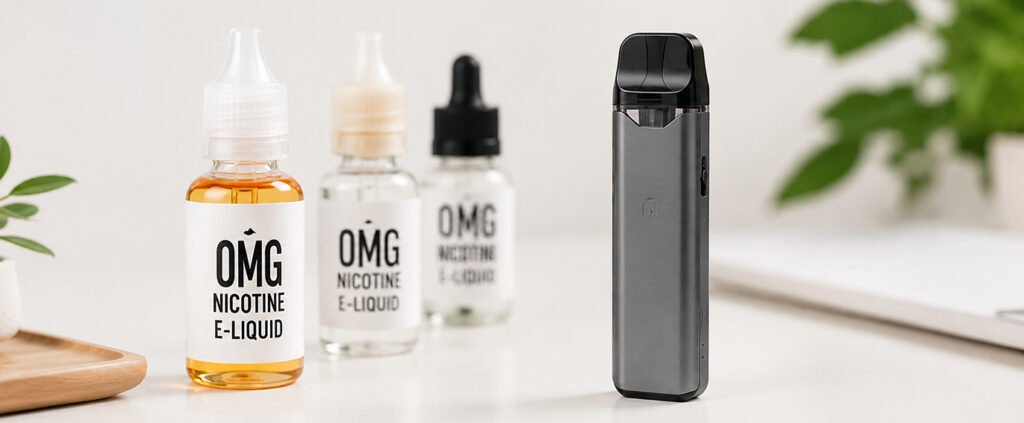
A nicotine free vape refers to a vaping device that uses e-liquid containing zero nicotine (0mg). It produces inhalable vapor by heating a mixture of propylene glycol (PG), vegetable glycerin (VG), and flavoring agents.
How Do Nicotine Free Vapes Work
0 nicotine vapes operate on the same core mechanism as traditional e-cigarettes, using a battery-powered coil to heat the e-liquid and turn it into inhalable vapor through atomization.
The key difference lies in composition, not function: there is no nicotine in the liquid, which removes nicotine—the primary additive compound in conventional vaping products.
Although nicotine is an optional ingredient rather than a required component, nicotine-free vaping still involves inhaling aerosolized substances produced through heating e-liquid.
What Kinds of Nicotine Free Vapes Are There
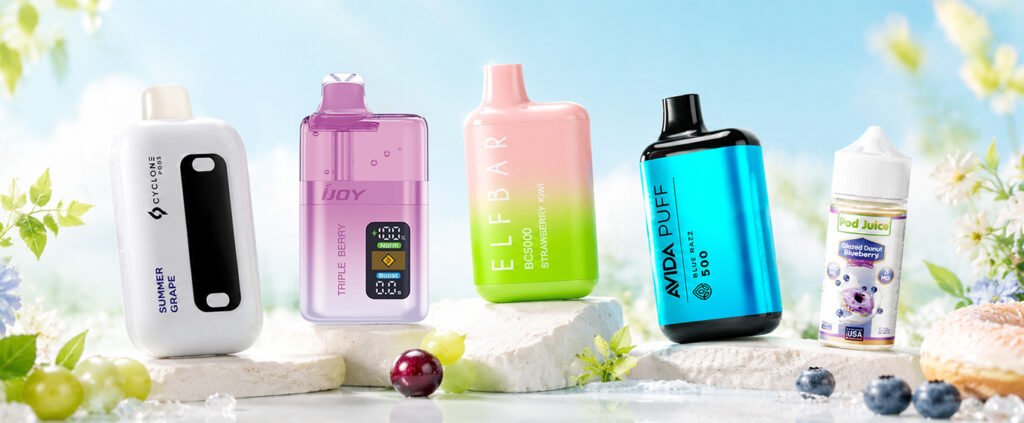
Nicotine-Free Vape Juice
Many popular vape juice brands offer 0 mg nicotine versions of their best-selling flavors. These are designed for refillable devices, allowing users to enjoy familiar flavor profiles without nicotine. However, not every flavor line is available in a nicotine-free option, so availability can vary by brand and product range.
Zero Nicotine Disposable Vapes
Disposable vapes without nicotine were once relatively uncommon, but they have become more widely available as demand has increased. Today, some major brands offer select flavors in 0% nicotine versions, although they may still be less widely stocked compared to standard nicotine disposables.
Prefilled Pod Systems
Certain closed pod systems are also available in nicotine-free versions. These devices come with prefilled cartridges, offering a convenient, low-maintenance option that does not require refilling e-liquid.
CBD Vapes
CBD vaping products, including disposable pens, cartridges, and e-liquids, typically do not contain nicotine. CBD vapes are often used as a non-nicotine alternative to traditional vaping, although they serve a different purpose compared to standard nicotine-free e-liquids.
Are Nicotine Free Vapes Safe? What the Evidence Says
Nicotine-free vapes (0mg vapes) are often marketed as a “safer” alternative to smoking and nicotine vaping. But the real question is not whether they are harmless—it’s what level of risk still remains when nicotine is removed.
10 evidence-based facts about zero nicotine vapes, categorized by chemical exposure, behavioral effects, and real-world usage patterns:
Chemical Exposure & Inhalation Risks
Fact 1: Nicotine-free does NOT mean risk-free
Even without nicotine, vaping still involves inhaling aerosolized chemicals produced by heating liquid. These aerosols are not just “water vapor.”
Fact 2: Main ingredients are still PG and VG
Nicotine-free vape liquids are typically made of propylene glycol (PG), vegetable glycerin (VG), and flavoring agents. While these ingredients are generally considered safe for ingestion, inhalation safety is more complex and still under study.
Fact 3: Heating creates harmful byproducts
Under certain high-temperature or “dry puff” conditions, PG and VG may degrade and form carbonyl compounds such as formaldehyde and acrolein, which are associated with respiratory irritation.
Fact 4: Flavorings can increase respiratory risk
Certain flavor compounds—particularly creamy or buttery profiles—have been associated with potential respiratory irritation in laboratory and observational studies, though long-term evidence remains limited.
Addiction & Behavioral Effects
Fact 5: “0 mg” does not always guarantee zero nicotine
Some analyses suggest that trace nicotine contamination may occasionally occur due to manufacturing variability or cross-contamination, so “0 mg” labeling may not always be fully precise or reliable.
Fact 6: Nicotine-free vaping reduces addiction risk
Without nicotine, the primary substance responsible for physical dependence is absent. This significantly reduces the risk of chemical dependence.
Fact 7: Vaping can still become a behavioral habit
Even without nicotine, vaping may become a learned behavior through hand-to-mouth action, sensory reinforcement, or social routines. This is considered behavioral habit formation rather than chemical addiction.
Real-World Usage Patterns
Fact 8: Teen use is mostly experimental and unstable
Research suggests that nicotine-free vaping among adolescents is often experimental and does not necessarily lead to long-term or regular use.
Fact 9: Some users transition from nicotine-free to nicotine vaping
Studies show a minority of nicotine-free users later move to nicotine vaping. However, this is not the dominant pathway.
Fact 10: “Safer than smoking” does NOT mean “safe”
Most public health evidence suggests vaping is likely less harmful than smoking combustible cigarettes. However, “less harmful” does not mean risk-free, and long-term effects are still being studied.
Are Nicotine Free Vapes Safer Than Nicotine Vapes
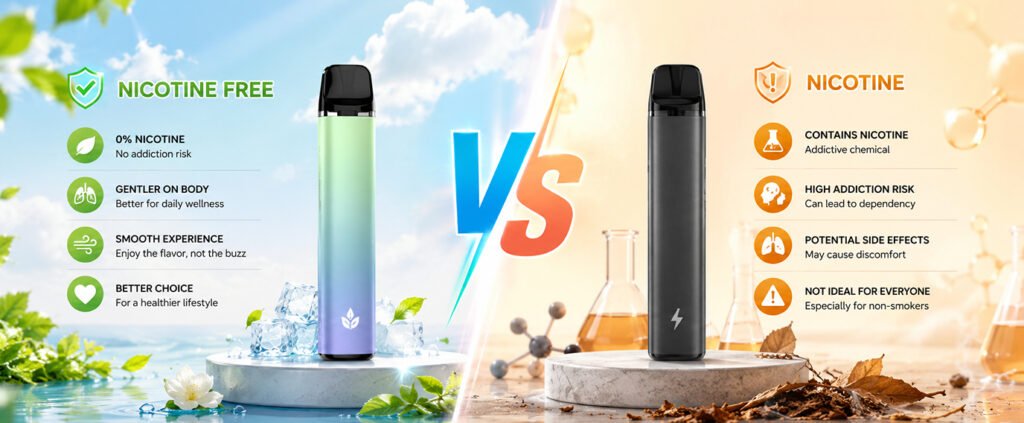
From a chemical dependency standpoint, no nic vapes are generally considered lower risk than nicotine vapes because they eliminate nicotine—the primary driver of addiction, dependence, and key cardiovascular effects such as increased heart rate and blood pressure. Without nicotine, users avoid physical dependence, which is the key difference between the two.
Both nicotine and nicotine-free vapes produce inhalable aerosols by heating e-liquids that contain PG (propylene glycol), VG (vegetable glycerin), and flavoring agents. These aerosols may still cause airway irritation, and under certain conditions, thermal breakdown can produce compounds such as formaldehyde and acrolein.
Overall, current evidence suggests both are likely less harmful than combustible cigarettes, but neither is risk-free. The main difference is that nicotine vapes add addiction and stimulant effects, while nicotine-free vapes remove nicotine dependence but retain aerosol exposure risks.
Key Comparison Table
| Factor | Nicotine Vapes | Nicotine-Free Vapes |
| Nicotine | Present | None |
| Addiction risk | High | Very low |
| Cardiovascular stimulation | Yes | No |
| Aerosol exposure | Yes | Yes |
| Overall risk vs smoking | Lower | Lower |
| Risk level | High | Low, but not risk-free |
Who Are Zero Nicotine Vapes For
Vapes without nicotine are not for everyone. Their value depends heavily on a user’s smoking history, nicotine dependence level, and intention behind vaping.
Suitable for
- Adult ex-smokers avoiding nicotine dependence
- Adult vapers tapering down nicotine use
- Adults who enjoy vaping primarily for flavor and sensory experience
- Social or occasional users who want a non-nicotine option in specific settings
Not suitable for
- Non-smokers or non-vapers
- Adolescents
- Pregnant or breastfeeding individuals
- Individuals with respiratory conditions (unless medically advised)
- Anyone seeking a “risk-free” alternative
FAQs about 0 Nicotine Vapes
Q1: Are Non Nicotine Vapes Completely Safe?
No, they remove nicotine-related risks but still involve inhalation of vaporized substances.
Q2: Do 0mg Vapes Contain Nicotine?
They are designed to be nicotine-free, but trace variability may exist in rare cases.
Q3: Is Nicotine Free Vaping Safer Than Smoking?
They are generally considered lower risk than smoking, but not risk-free.
Q4: Can Non Nicotine Vapes Cause Addiction?
They do not cause chemical addiction, but can lead to habitual behavior.
Conclusion
Nicotine-free vapes are electronic devices that deliver vapor without nicotine, typically using propylene glycol (PG), vegetable glycerin (VG), and flavoring agents. While removing nicotine eliminates the main driver of dependence in traditional vaping products, users are still exposed to inhalable aerosols produced by heated e-liquid.
Current scientific consensus suggests nicotine-free vaping likely carries a lower risk than combustible cigarette smoking. However, it is not risk-free, and long-term health effects remain under study.
From a regulatory and harm-reduction perspective, consumers should choose products that comply with recognized standards such as FDA-authorized or marketing-order-approved products in the U.S. (where applicable), or EU Tobacco Products Directive (TPD) compliant products, which generally ensure more consistent quality, safety, and labeling transparency.
To reduce risk, products should be purchased through regulated channels such as licensed vape shops or reputable online vape stores with age verification, transparent product information, and compliance with local regulations. Avoid unverified sources.