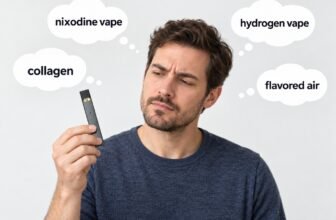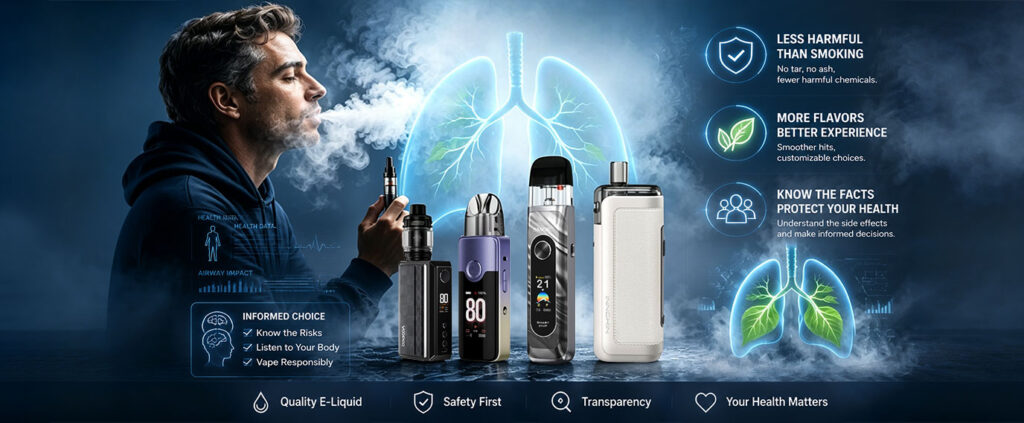
Vaping is generally considered less harmful than smoking cigarettes, but it is not risk-free when it comes to the health effects of vaping. Common side effects include nicotine dependence, throat irritation, and both short- and long-term risks that are still being studied.
I’ve been vaping for several years now, mostly because I wanted a smoother, safer alternative to smoking. And honestly, it’s been pretty convenient—no ash, no lingering smoke smell, and generally a gentler hit.
But over time, I’ve learned that vaping isn’t completely risk-free. Some effects are subtle, like a dry throat or a bit of fatigue, while others can be more noticeable depending on usage habits and nicotine strength.
In this vaping guide, I’m sharing what I’ve noticed from both short-term and long-term use. I’ll walk you through the common side effects, what they feel like, and practical ways to deal with them. Think of it as a friendly heads-up from someone who’s been in the vaping game for a while.
Common Short-Term Side Effects

Dry Mouth
One of the most common side effects I’ve noticed is dry mouth. It’s usually tied to the main ingredients in e-liquid: PG (propylene glycol) and VG (vegetable glycerin). Interestingly, even 100% VG vapers can feel it. Both PG and VG attract water, which can actually leave your mouth feeling parched.
If your mouth feels dry, simple hydration usually helps—drink more water, or use an oral rinse like Biotene. If dryness persists, it’s worth checking in with a dentist or doctor, since chronic dry mouth can lead to more serious oral issues.
Dizziness & Fatigue
Feeling lightheaded or dizzy, or sometimes unexpectedly tired? I’ve experienced this when using high nicotine levels, especially if you’re new to vaping.
It can feel like a mild caffeine crash, and effects vary depending on the device, e-liquid strength, and nicotine intake.
If these symptoms bother you, try lowering your nicotine strength, taking smaller puffs, or pacing your vaping. Your body usually adapts over time.
Sore Throat & Coughing
A scratchy throat or occasional coughing is common, especially for new vapers. These symptoms can be caused by nicotine, PG, flavorings, or even your coil material. Some coils contain nickel, which can trigger allergic reactions for certain users.
In many cases, simple adjustments can help:
- Switch to higher VG e-liquids
- Lower nicotine strength
- Adjust airflow settings
- Choose suitable flavors
- Change coil materials
If discomfort persists despite these changes, it’s best to consult a healthcare professional.
Headaches & Nausea
Sometimes vaping can leave you with a mild headache or an upset stomach. This often happens if you’ve recently quit smoking, are a bit dehydrated, or your nicotine intake is higher than usual. Think of it like your body adjusting to a new routine.
To feel better:
- Drink more water
- Reduce nicotine strength
- Switch flavors
- Shorten vaping sessions
If symptoms continue, consult a healthcare professional.
Weight Loss/Gain
Nicotine can suppress appetite, but don’t expect vaping to be a weight-loss hack. Some vapers eat less because of oral fixation with sweet flavors, while others may gain weight if they quit vaping and replace the hand-to-mouth habit with snacks.
Chest Pain
Chest pain is serious. It can be caused by high nicotine, heat, or certain flavorings like cinnamon.
Stop vaping if it happens and consider changing your setup or flavors. Persistent pain should be checked by a doctor immediately.
Anxiety or Restlessness
Occasionally, I’ve noticed a jittery feeling or mild anxiety after vaping, especially with higher nicotine levels or frequent use. It’s not constant, but it can sneak up if I chain-vape too quickly.
Try spacing out your puffs and lowering nicotine if it becomes bothersome.
Dry or Irritated Eyes
Vaping can sometimes make my eyes feel dry, especially after long sessions indoors. PG in e-liquids can have a slight dehydrating effect, which affects more than just your mouth.
Stay hydrated and consider using lubricating eye drops if needed.
Potential Long-Term Risks
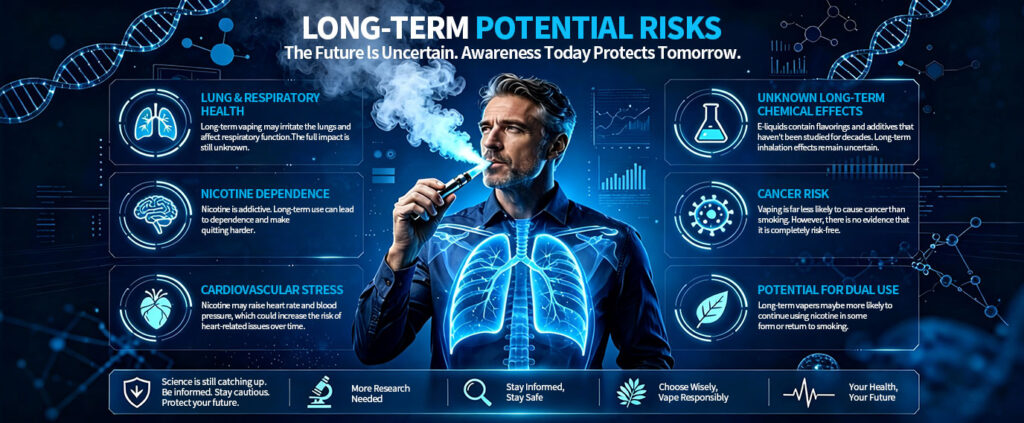
Long-term effects are still being studied. Current research suggests that vaping is generally less harmful than smoking, but not risk-free.
Lung & Respiratory Health
The long-term effects on lungs are still unclear. Heavy vaping may irritate the lungs or affect respiratory function. For most casual users, risks remain low, but daily vapers should pay attention.
Nicotine Dependence
Nicotine is addictive. Long-term use can lead to dependency, making quitting harder. Being mindful of dosage can reduce the risk.
Cardiovascular Stress
Nicotine may slightly raise heart rate and blood pressure. While lower risk than smoking, heavy users should monitor their cardiovascular health.
Unknown Long-Term Chemical Effects
Flavorings and additives in e-liquids haven’t been studied for decades. Long-term inhalation could have unforeseen effects. Most casual users are unlikely to experience serious issues, but it’s something to keep in mind.
Cancer Risk
Research shows vaping is far less likely to cause cancer than smoking. There’s no strong evidence linking vaping directly to cancer, though it’s not zero-risk.
Practical Tips & Daily Advice
From my experience, most side effects are manageable if you pay attention to your body. Here’s what helps:
- Stay hydrated
- Adjust nicotine levels
- Take breaks and pace your vaping
- Choose higher VG juices if dry mouth or throat is an issue
- Monitor any unusual symptoms and see a doctor if persistent
FAQs
Q1: Is Vaping Bad for You?
Vaping is not completely safe from a vaping health perspective. While it is generally considered less harmful than smoking cigarettes, it still carries risks such as nicotine addiction, throat irritation, and long-term health uncertainty.
Q2: What Are the Side Effects of Vaping?
Common vaping side effects include dry mouth, dizziness, coughing, headaches, nausea, and mild anxiety. Most effects are linked to nicotine strength and frequency of use.
Q3: Is Vaping Safer than Smoking Cigarettes?
Yes. Vaping is considered safer than smoking because it does not involve combustion, tar, or many harmful chemicals found in cigarettes. However, it is still not risk-free.
Q4: Can Vaping Help You Quit Smoking?
Many smokers use vaping as a smoking cessation tool. It may help reduce cigarette use, but success depends on proper nicotine management and a clear quitting plan.
Q5: Can Vaping Cause Nicotine Addiction?
Yes. Most vaping products contain nicotine, which is highly addictive and can lead to dependence with regular use.
Conclusion
Vaping offers a smoother, more convenient option for smokers and is among the most popular smoke-free alternatives. However, it is not risk-free. Most side effects are mild and manageable, but long-term impacts are still being studied.
For those asking “Is Vaping Bad for You?”, current evidence suggests that vaping may expose users to fewer harmful chemicals than combustible cigarettes, but it should not be considered completely harmless.
Listen to your body, adjust your habits, and stay informed — vaping responsibly helps support a safer overall experience.